The Mönch
I’d like to thank the existence of trains for this ascent
August 18, 2023
All of the elderly in Switzerland are fit. Of course, that is a slight exaggeration but not by much. Decorating every hiking trail junction are distinct yellow trail markers pointing you along the right path. For some reason I have yet to discern, these markers don’t inform you of trail distance but of hiking time. A time that is always seemingly way too short for the distance as if to say, “this is how fast the average Swiss moves you weak unfit fool.” Or maybe that’s just me. Every weekend the train stations are filled with seniors and young families alike all decked out in hiking gear heading into the mountains. Helmets and ice axes are a common sight strapped to the backs of climbers lined up at Migros take away. This is not a sight you see in Canada, even in Vancouver where the mountains, by North American standards, are right at our doorstep. The big difference lies with accessibility. The Swiss transportation infrastructure is next to none. A system that integrates local public transport, country wide trains, ferries, and an extensive cable car network all into a cohesive and easy to navigate entity. You can access every single tiny mountain village within a few short hours. The mountain trails are no different. Tens of thousands of kilometers of meticulously maintained trail meandering the mountainous land interspersed with huts serving up amazing meals while providing bedding, blankets, and a place to sleep. There is no need to carry food or shelter. This accessibility has led to an ingrained cultural habit of enjoying the mountains.

However, there are downsides. What you gain in accessibility you lose in raw wilderness: there simply isn’t any in Switzerland. You are never more than a few kilometers away from a cold Rivella and a bag of Zweifel paprika chips. Mountaineering takes on a very different meaning in the Alps. No long approaches and no feeling of isolation. It makes for some very pleasant and much less miserable alpinism. Though, in some ways, it is less rewarding.
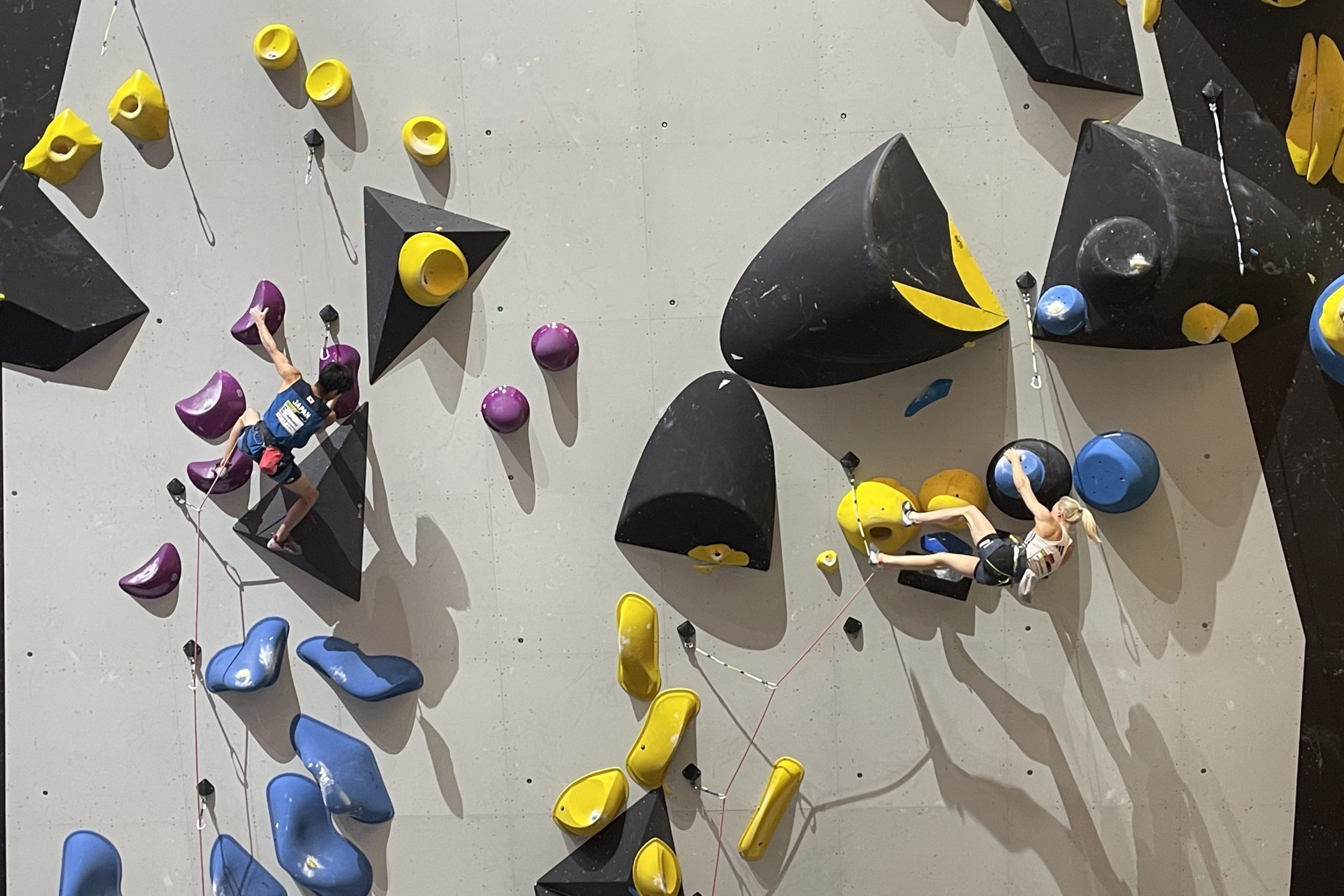
I didn’t travel to Switzerland specifically for mountaineering. Of course, I thought I’d be able to knock off a couple peaks while I was there, but it was primarily a trip to visit family and to watch the World Climbing Championship which so happened to be taking place a fifteen minute walk from my aunt’s place. About a month before leaving, inspired by an Instagram post, I had gotten into my head the idea of summiting Mont Blanc in a day from the valley floor. That became my one ambitious climbing goal for the trip. I ignored the fact that I needed to properly acclimatize and should probably be relatively fit. I thought I’d figure it out once I got there. To test the effects of altitude I climbed Lagginhorn, the only 4000m peak in Switzerland climbable without any mountaineering gear. I had hoped that I would be an exception to the rule and the altitude wouldn’t affect me at all but of course that was not the case. The effects however were minimal and not entirely unexpected, but it exhausted me more than I had hoped. On top of that, I had less free time than I was expecting. It didn’t fare well for Mont Blanc. I had also eaten one too many mandelgipfels and drunk a few too many (litres of) Rivella. Despite what people might say about me, I do know when to abandon an idea so I accepted the fact that I’d have to leave Mont Blanc for another trip. As a replacement I turned to the Mönch.
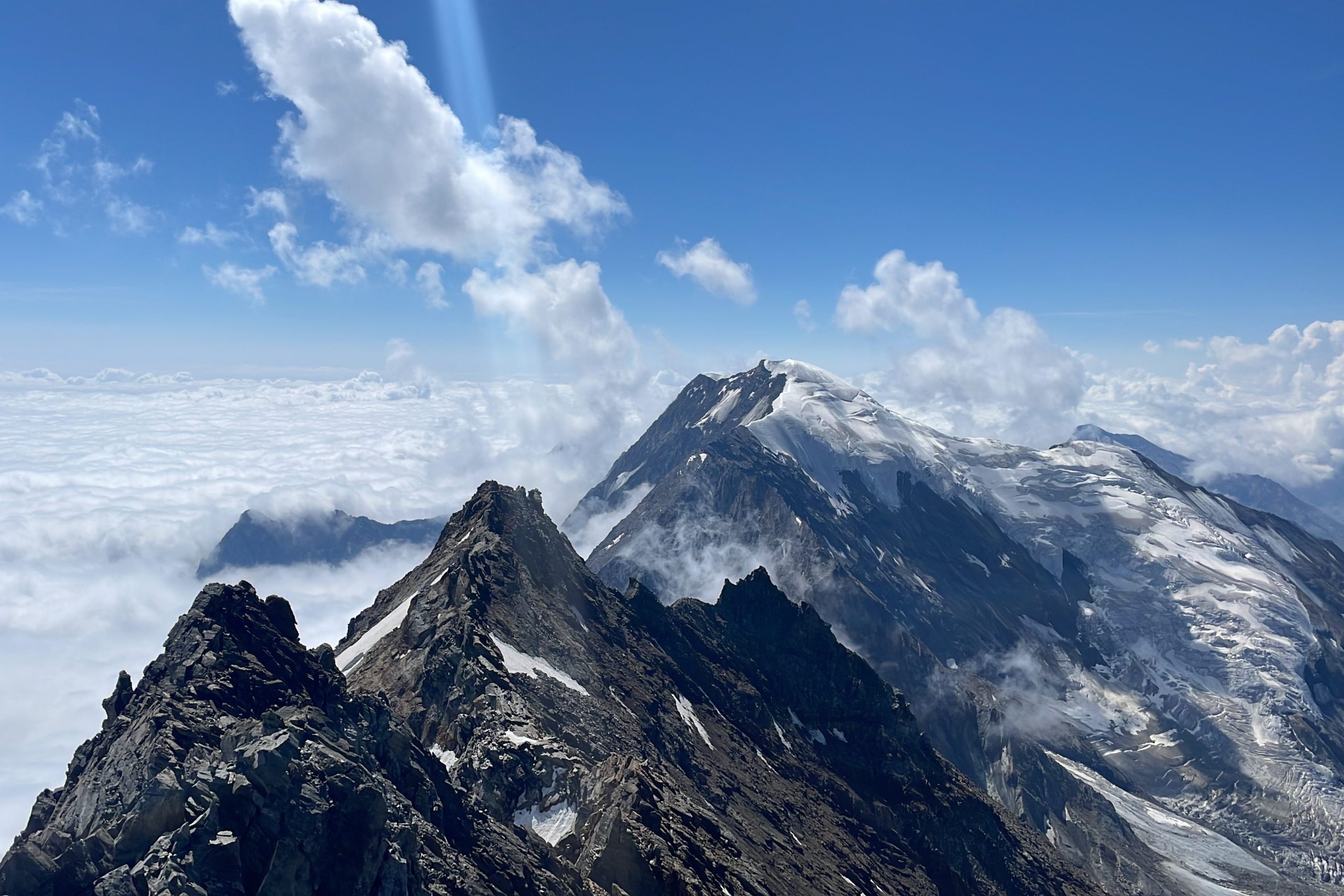
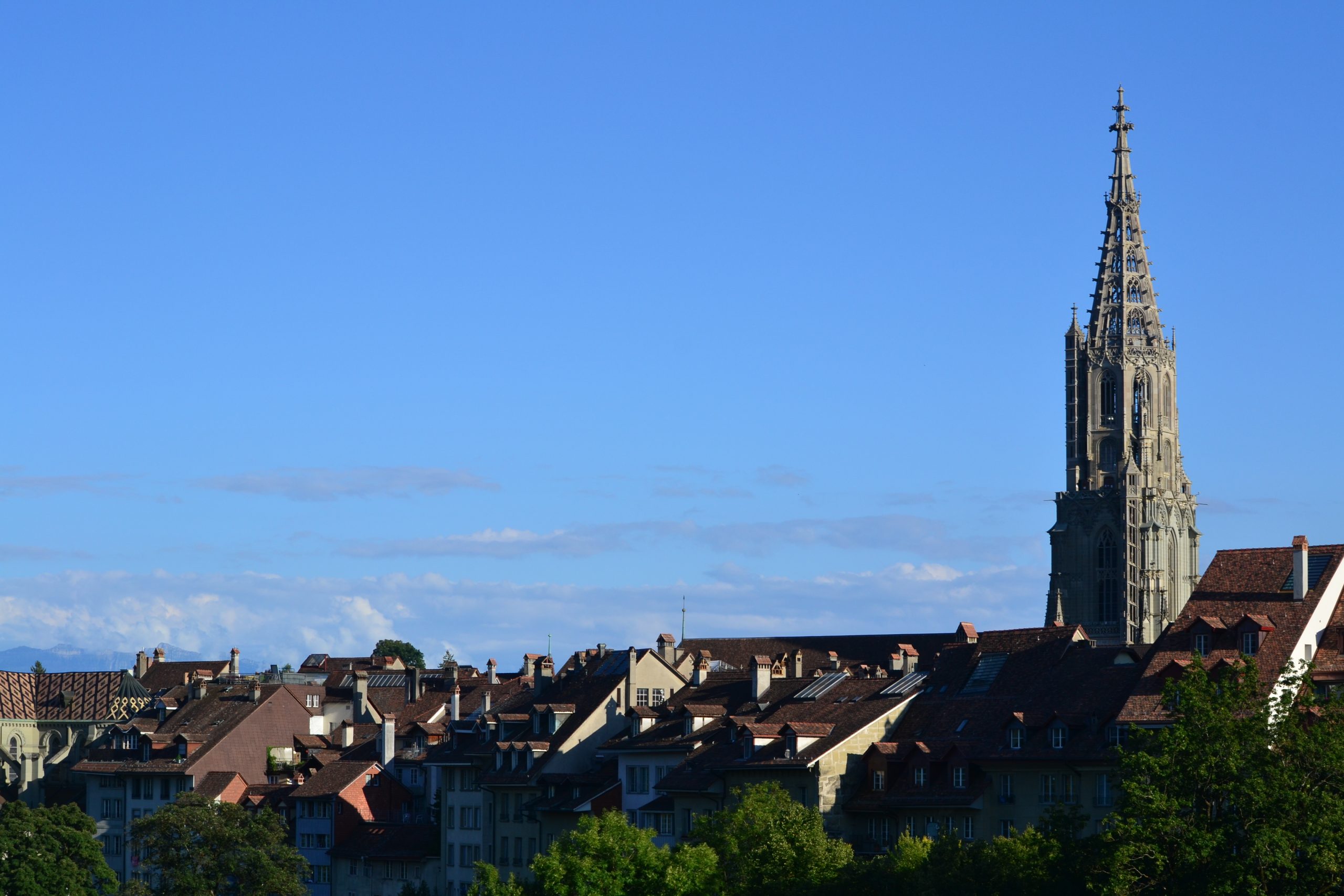
Despite visiting Switzerland about a dozen times, I had never truly considered climbing in the Swiss alps. Mountaineering just wasn’t on my radar until quite recently. Once I did fall for its dangerous appeal, the famous Swiss trio naturally rose to the top of my list. The Eiger, Mönch, and Jungfrau make up an intimidating mass of rock towering kilometers above the surrounding countryside. Every time I would visit Bern, they loomed large on the horizon. After a few mountaineering objectives under my belt, I finally took a more serious look at the peaks.
There was just one problem: I had no one to climb with. It was going to be a solo adventure the risks of which I have detailed extensively in previous reports. Doing some online research, while finding very little about soloing, I realized that the normal route (southeast ridge) on the Mönch was well within my comfort and skill level. And, because Switzerland, there was no accessibility issues. While the summit was at 4107m, the famous Jungfraujoch train would take me up to around 3,450m through a tunnel carved into the mountain massif at the turn of the 19th century. From the Jungfraujoch you walk a groomed and cordoned off path along the glacier which leads to the Mönchhutte. While technically on a glacier, it is safe and walked by hundreds of tourists every day sporting every style of shoe across the Footlocker’s entire sale catalogue.
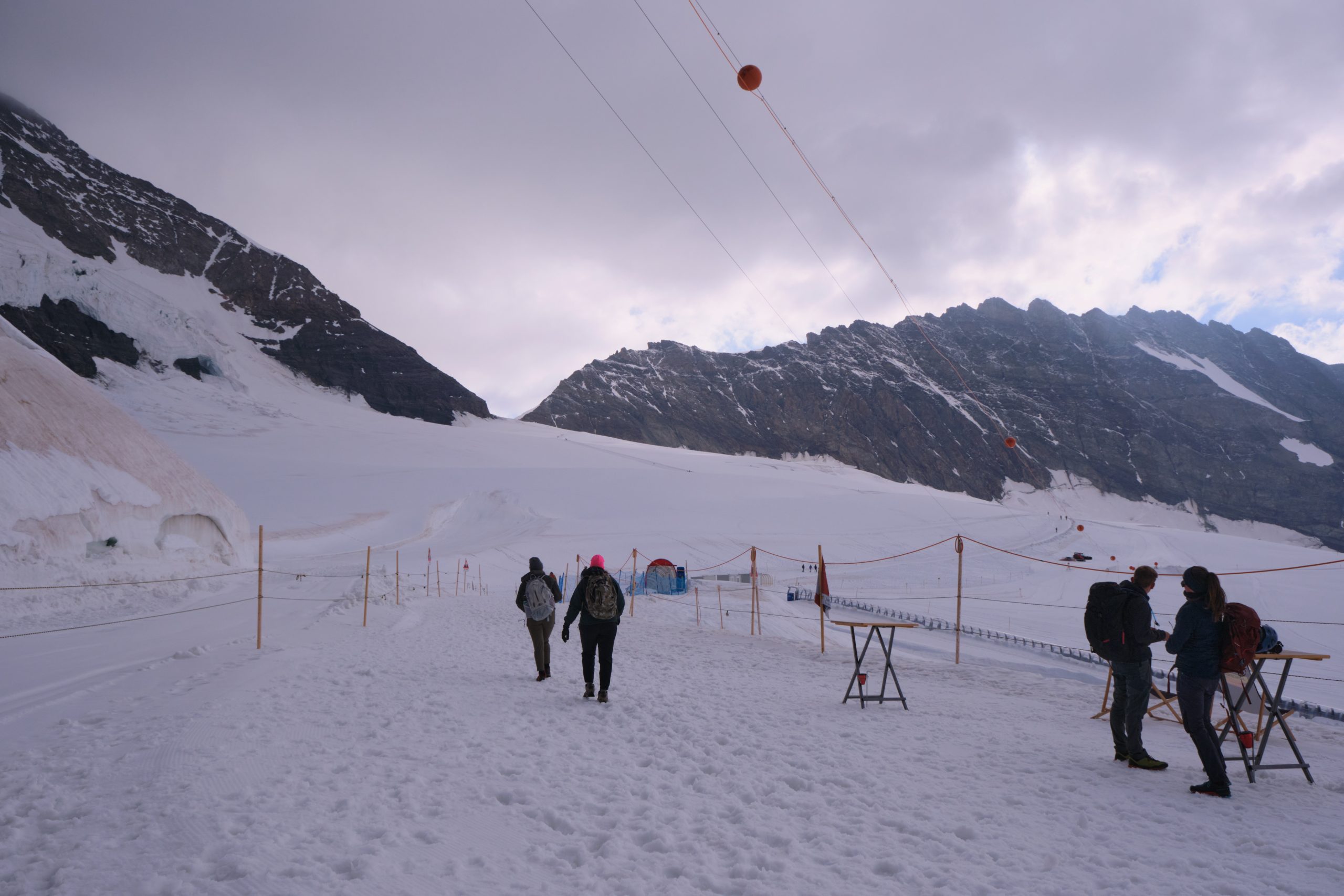
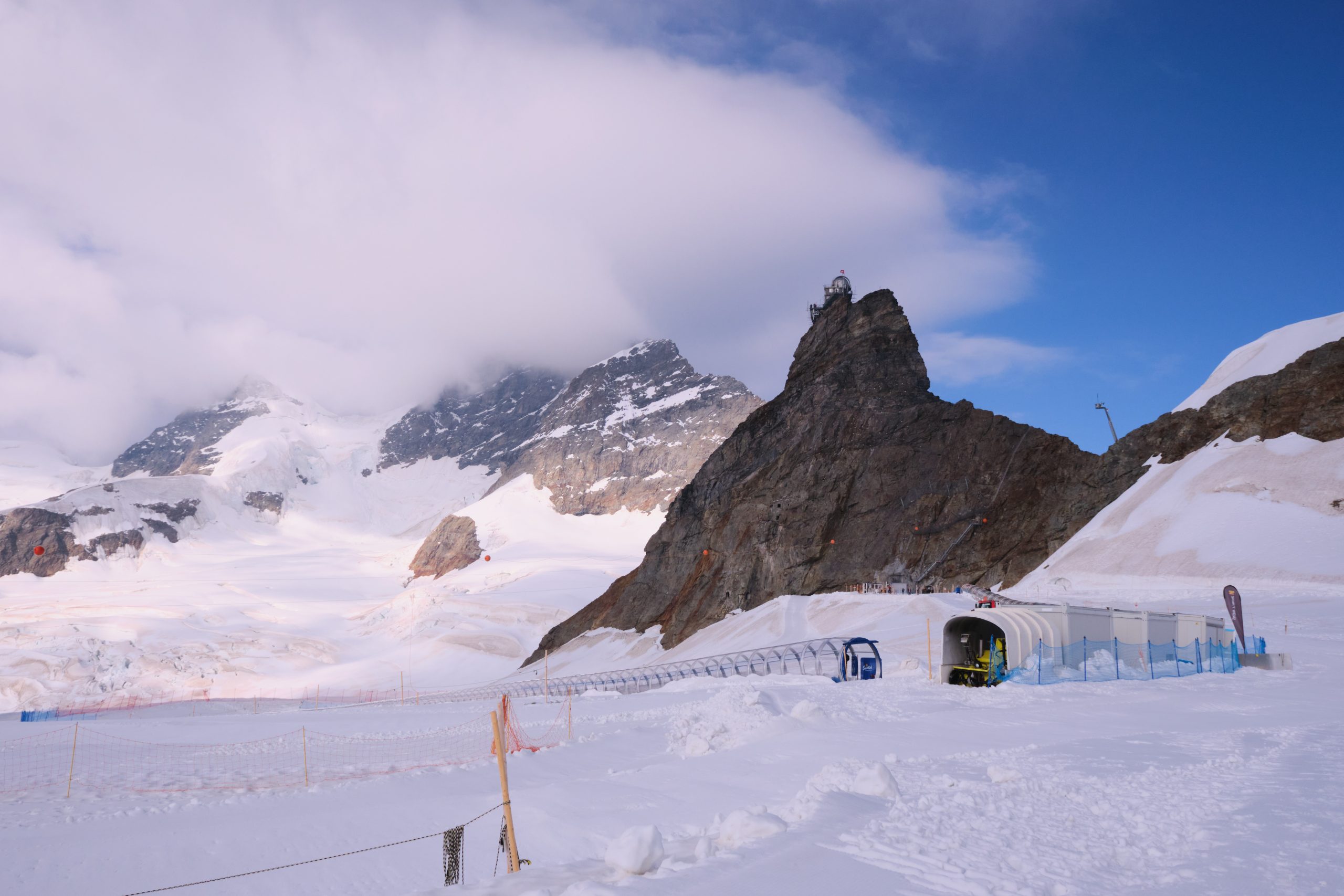
I left Bern on the 6:04 train and was scheduled to reach Grindelwald at 7:34; on time to catch the 7:45 cable car up to the Jungfraujoch train station. Bern sits at around 500m in elevation, so I was about to gain over 3500m in a day. Definitely taking the climb high/sleep low to the extreme. The Jungfraujoch was filled but not crowded with early morning tourists as the train crawled its way up the famous tunnel. From the station the tourists dispersed and I made a beeline for the trailhead. I wanted to climb as fast as possible as the weather was projected to be very warm.
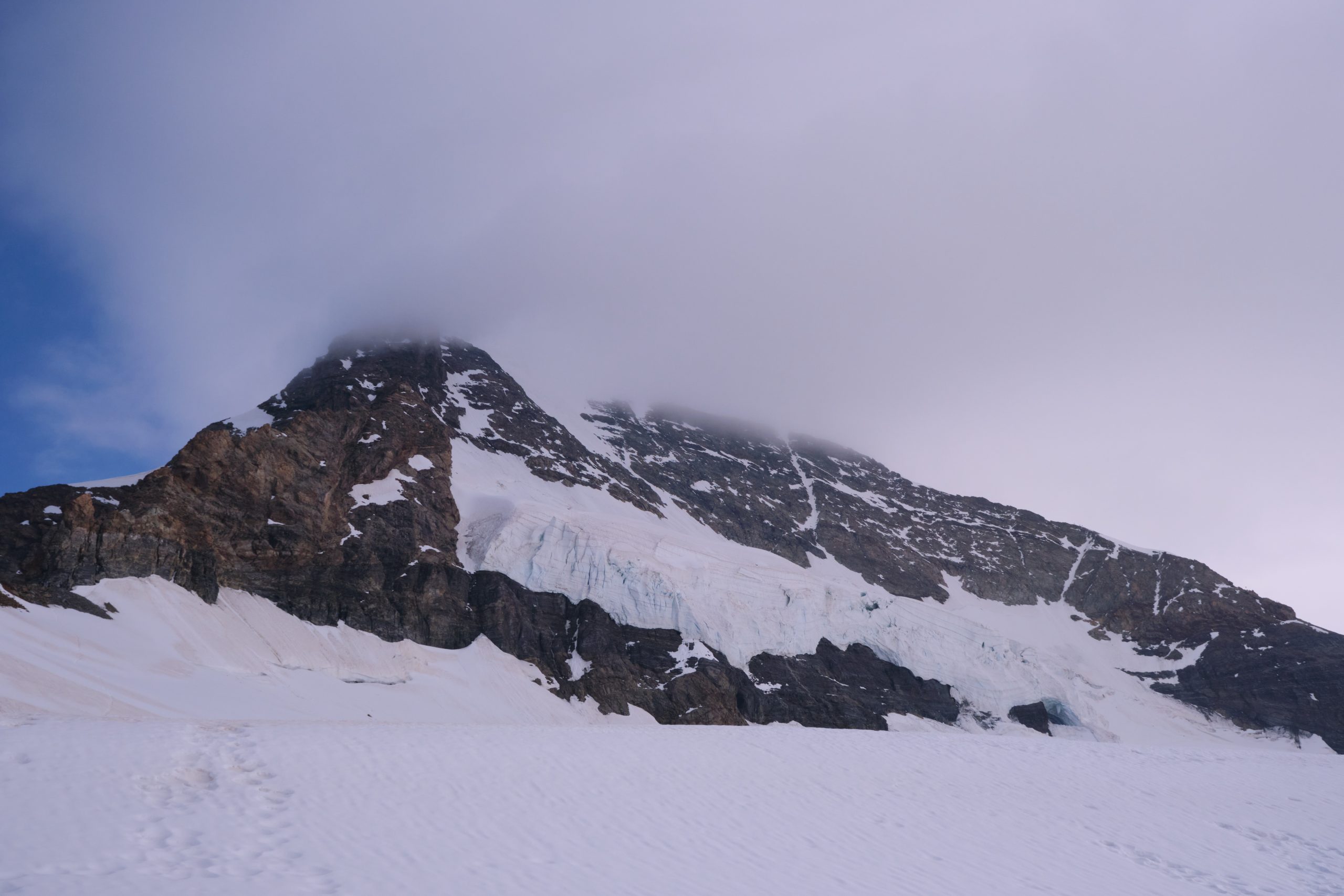
Starting at 9:15, I sped up the groomed path to the base of the Mönch’s southeast ridge and was surprised to find a literal via ferrata style ladder in the rock rising up the first ten meters. I suppose this was Europe. People have been climbing these mountains for a long time. Despite being confident, I had been slightly unsure of what to expect, but seeing the ladder removed the possibility of it being too technically challenging. While I knew the route was graded PD (peu difficile), you never know with Europeans. Remember, everyone is fit.
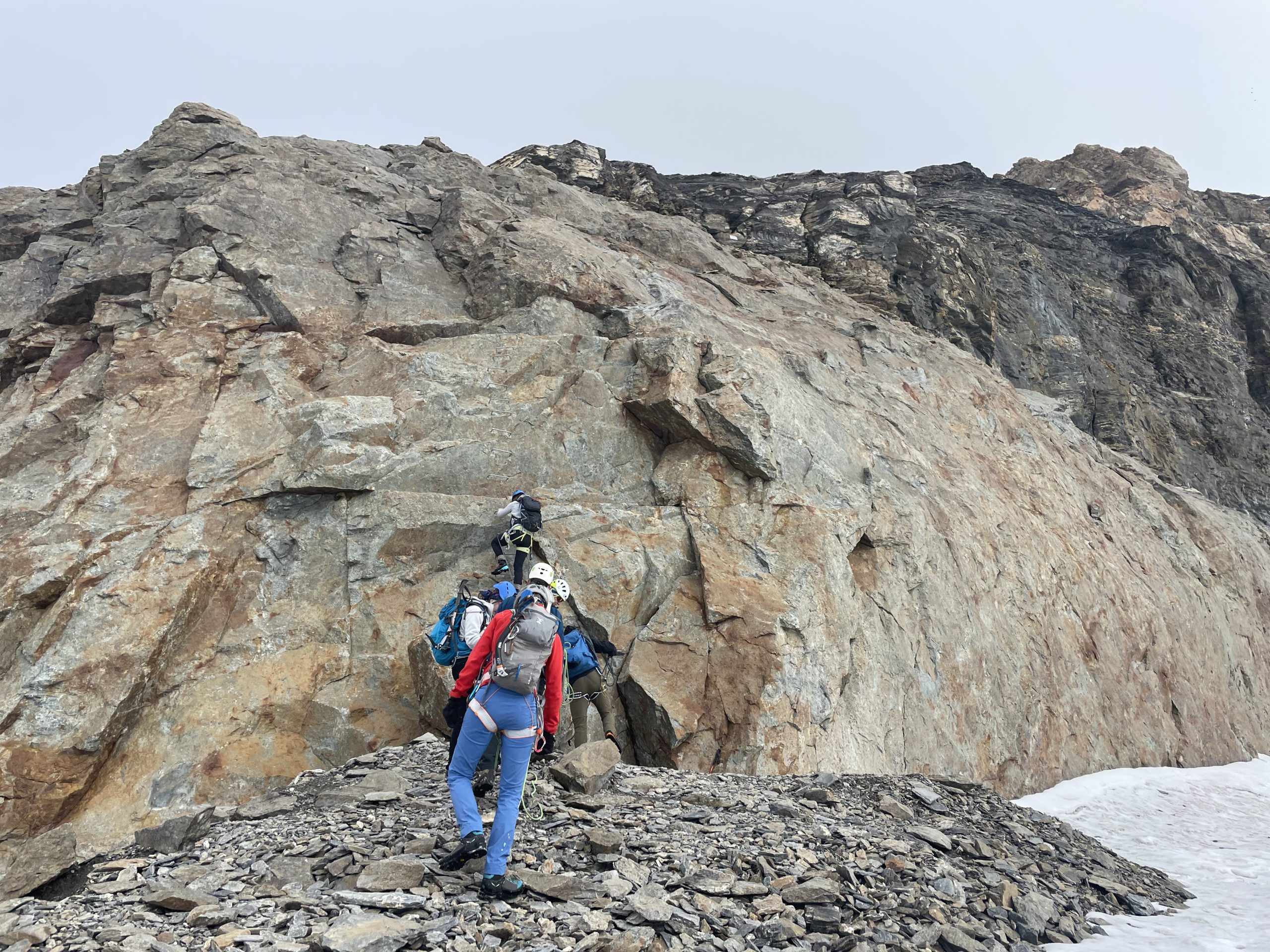
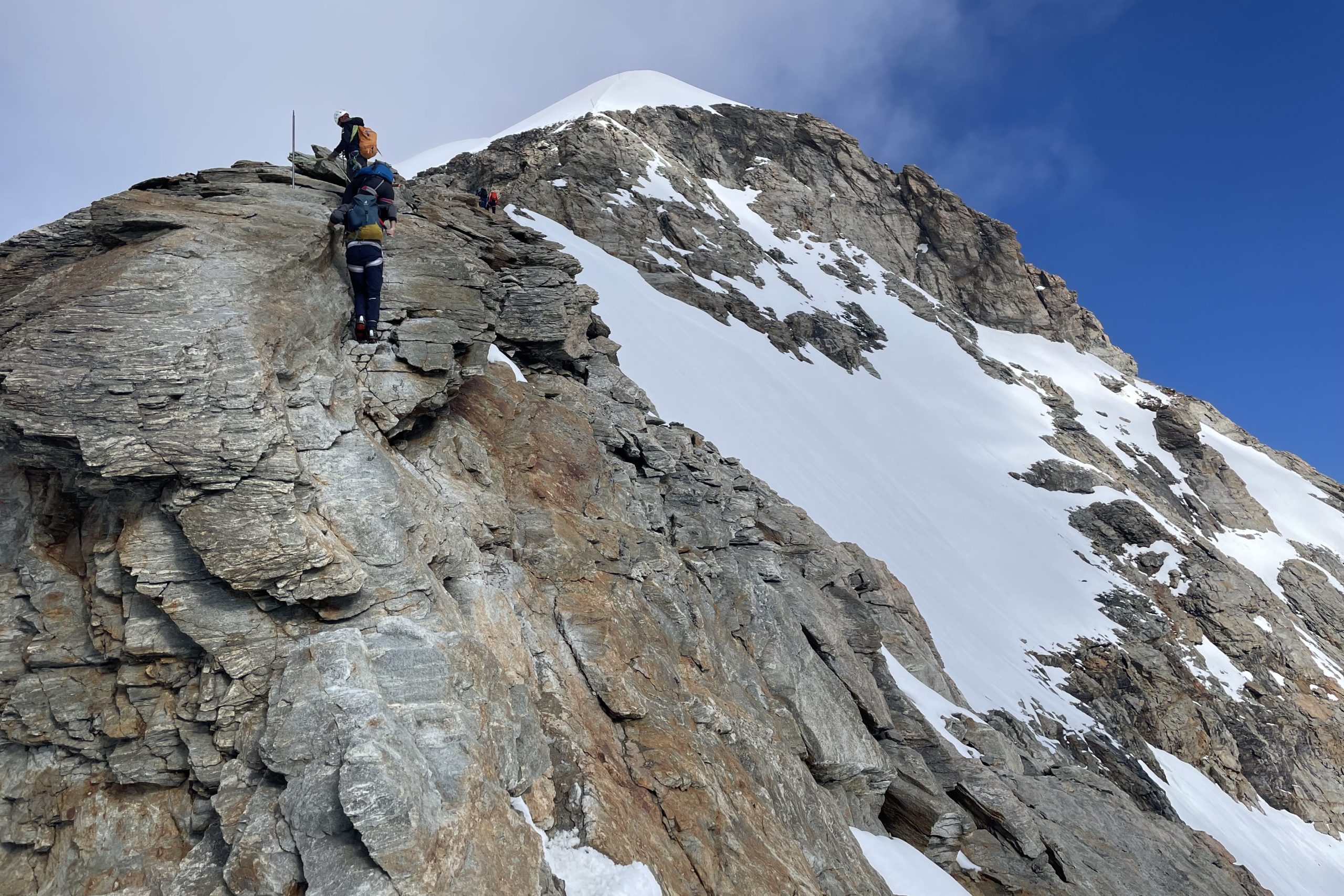
There were a decent number of groups on the route. A few coming down and a few ascending. Nearly all were guided. and everyone apart from one was in a roped team of two or three. Despite feeling the low air pressure, I made my way up pretty quickly. There were a few rock steps but nothing past a (very) generous (very) low 5th class. While the whole thing was quite exposed, there was no reason to fall. The route is very well travelled so the loose rock had all been knocked down.
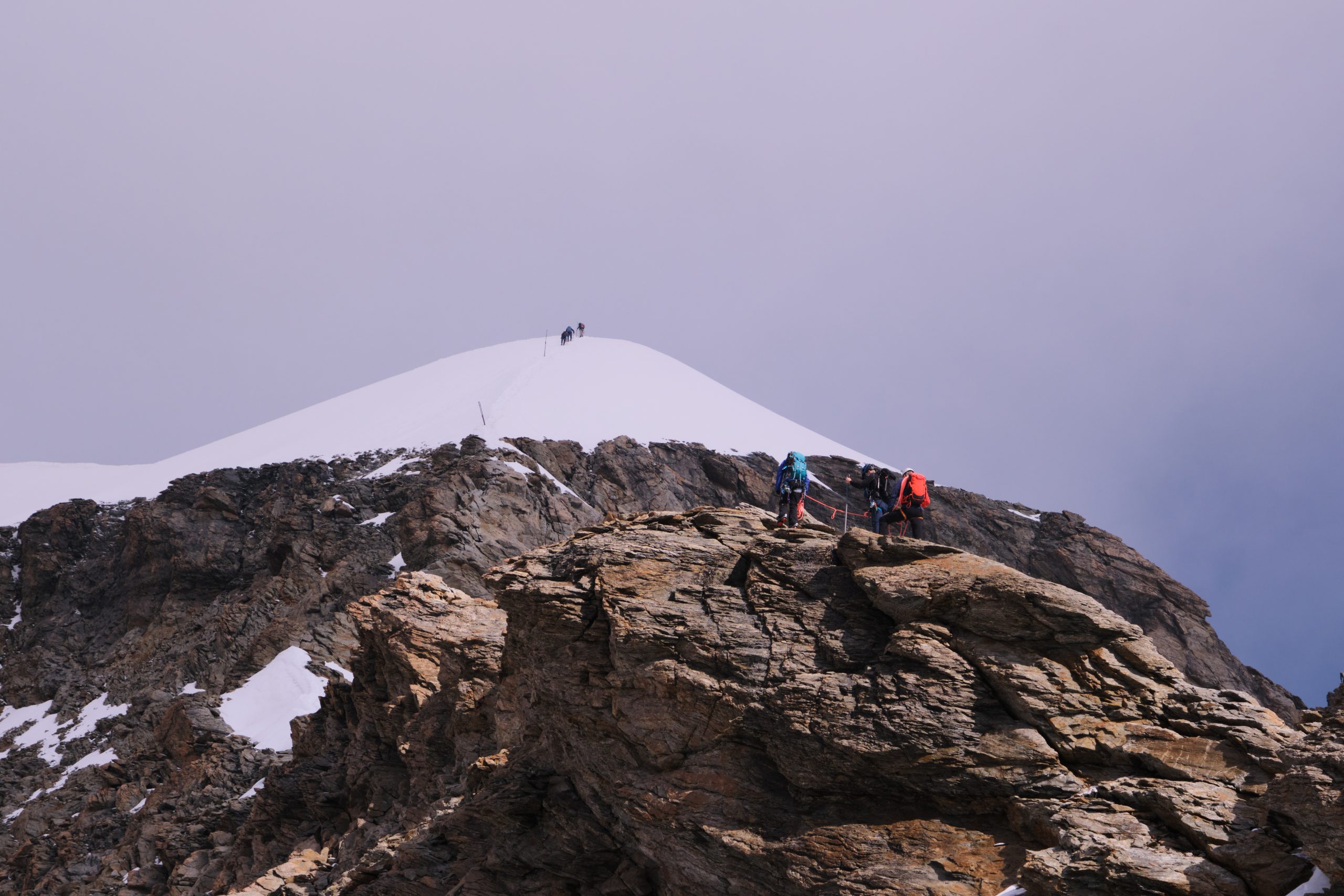
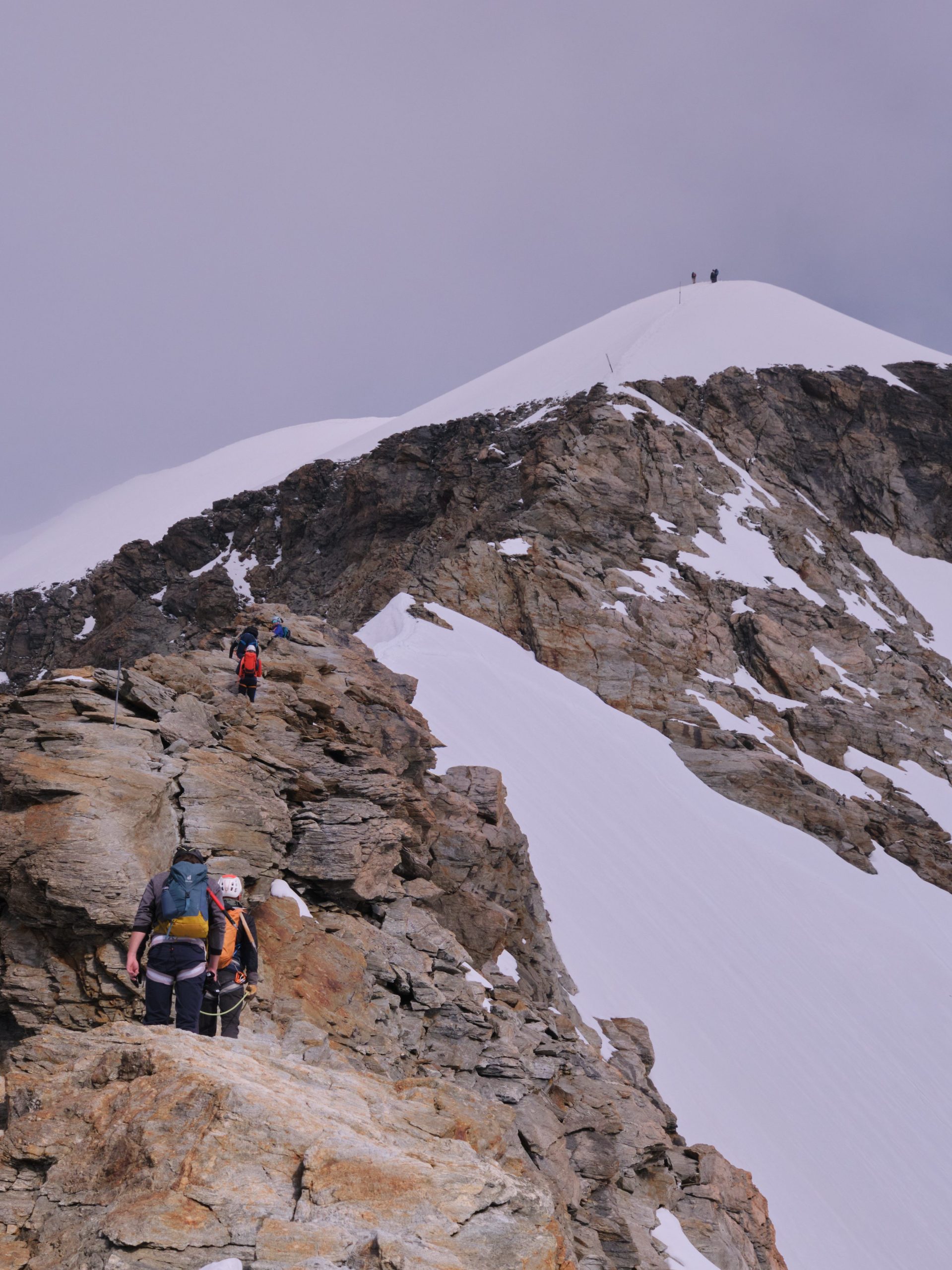
Around halfway up the ridge, a snowy slope cut upwards interspaced less and less frequently with rocky terrain so on went the crampons and out came the ice axe. I was passing the guided groups, but the other solo climber travelled at around the same pace as me. The climb was beautiful and had just enough technical and high consequence terrain to be fun. This might qualify as an entirely type 1 fun adventure. That is quite rare in Vancouver where there is often a long and painful approach.



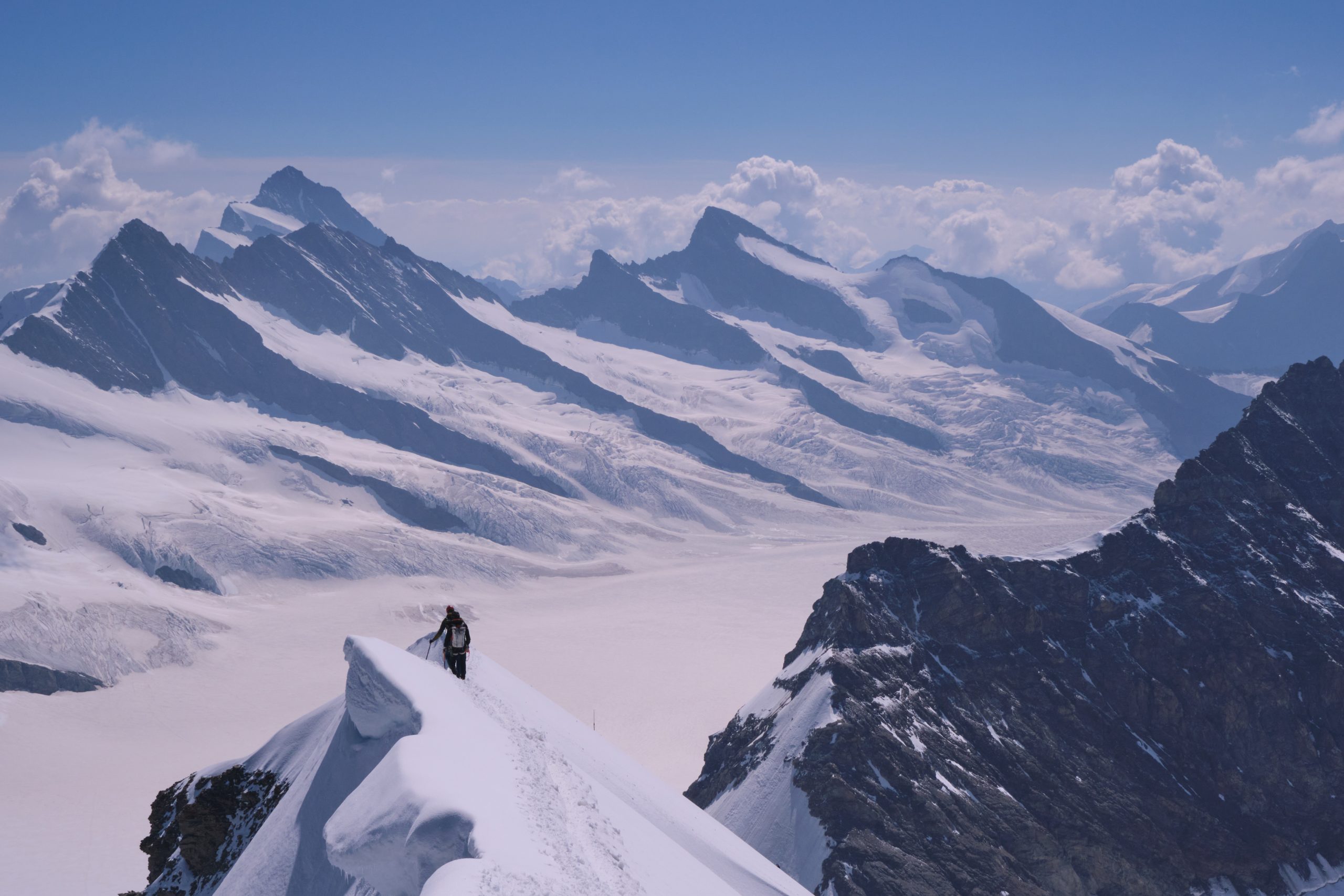
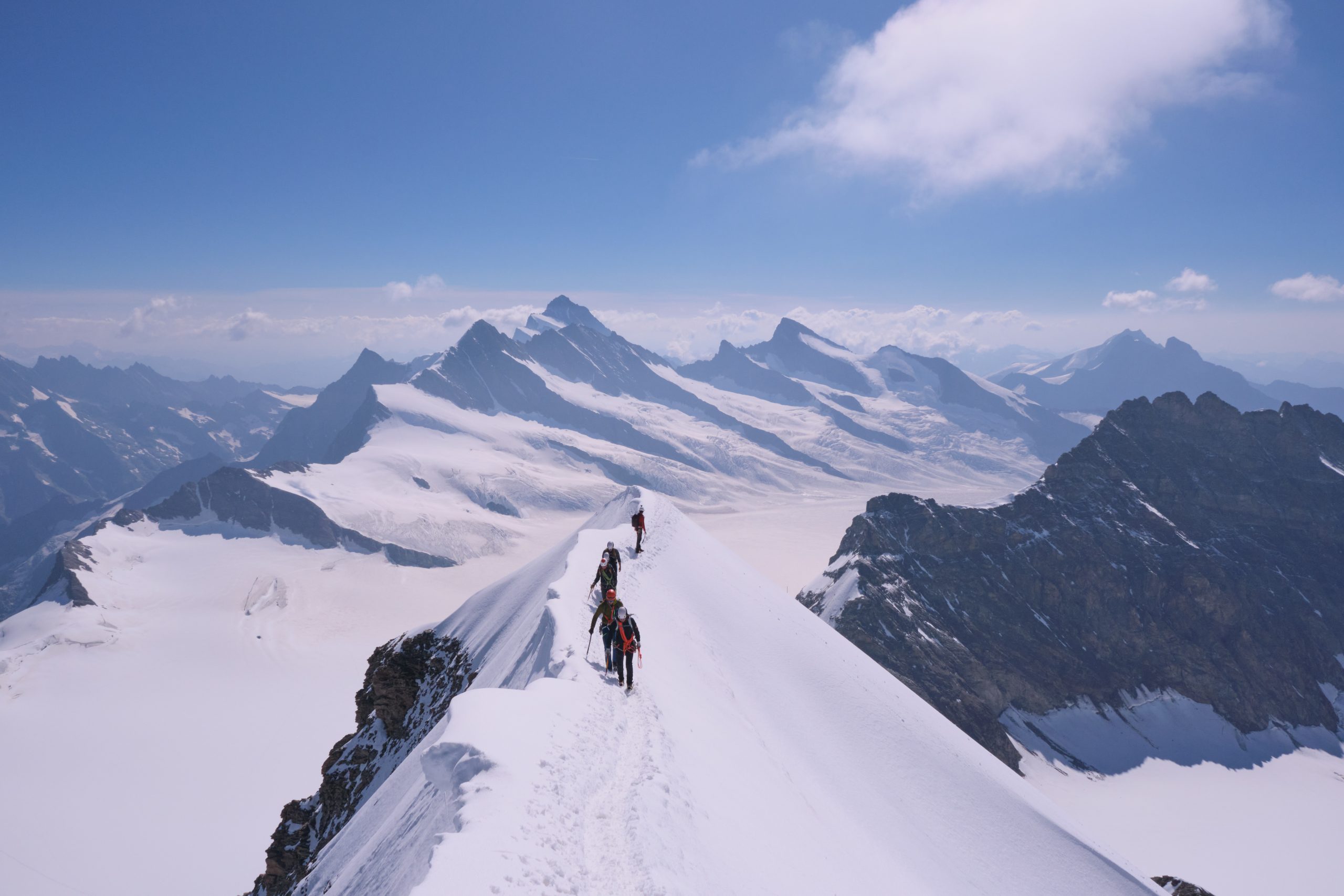
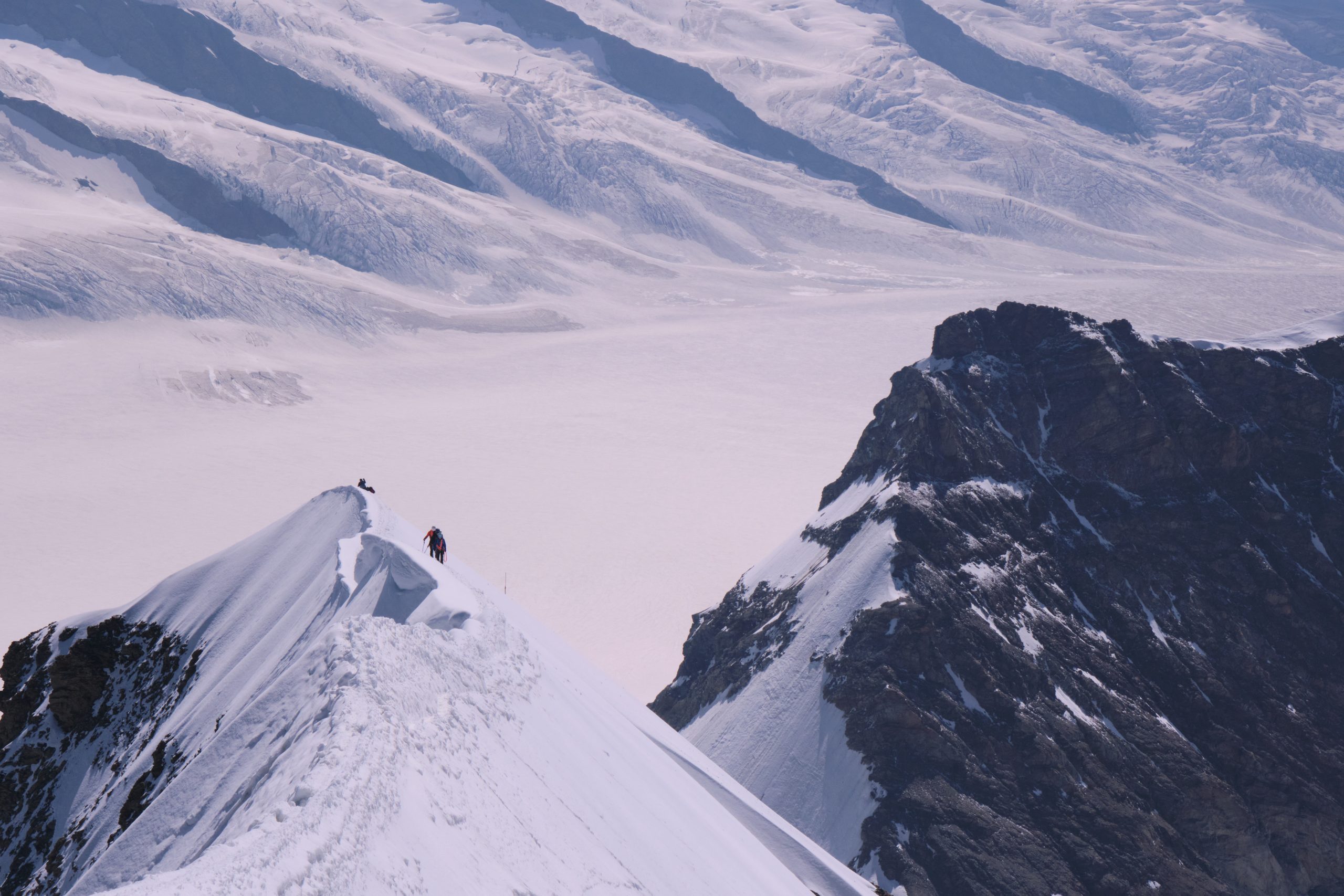
The snow was softening as the hot sun beat down. A final snowy climb led to a long knife edged and corniced arete which cut west toward the summit. This was my first time on such a narrow arete. It was incredible. Either side drops hundreds of meters to your death, before you a white sliver of a path scarcely wider than your carefully placed foot. Looking south, a skyline of 4000m peaks was split by the massive Aletsch Glacier and to the north, far below, was the Swiss plateau draped in a pastoral green. With one foot in front of the other I was soon on the summit, shortly joined by two other groups. Quite the view for such minimal effort.
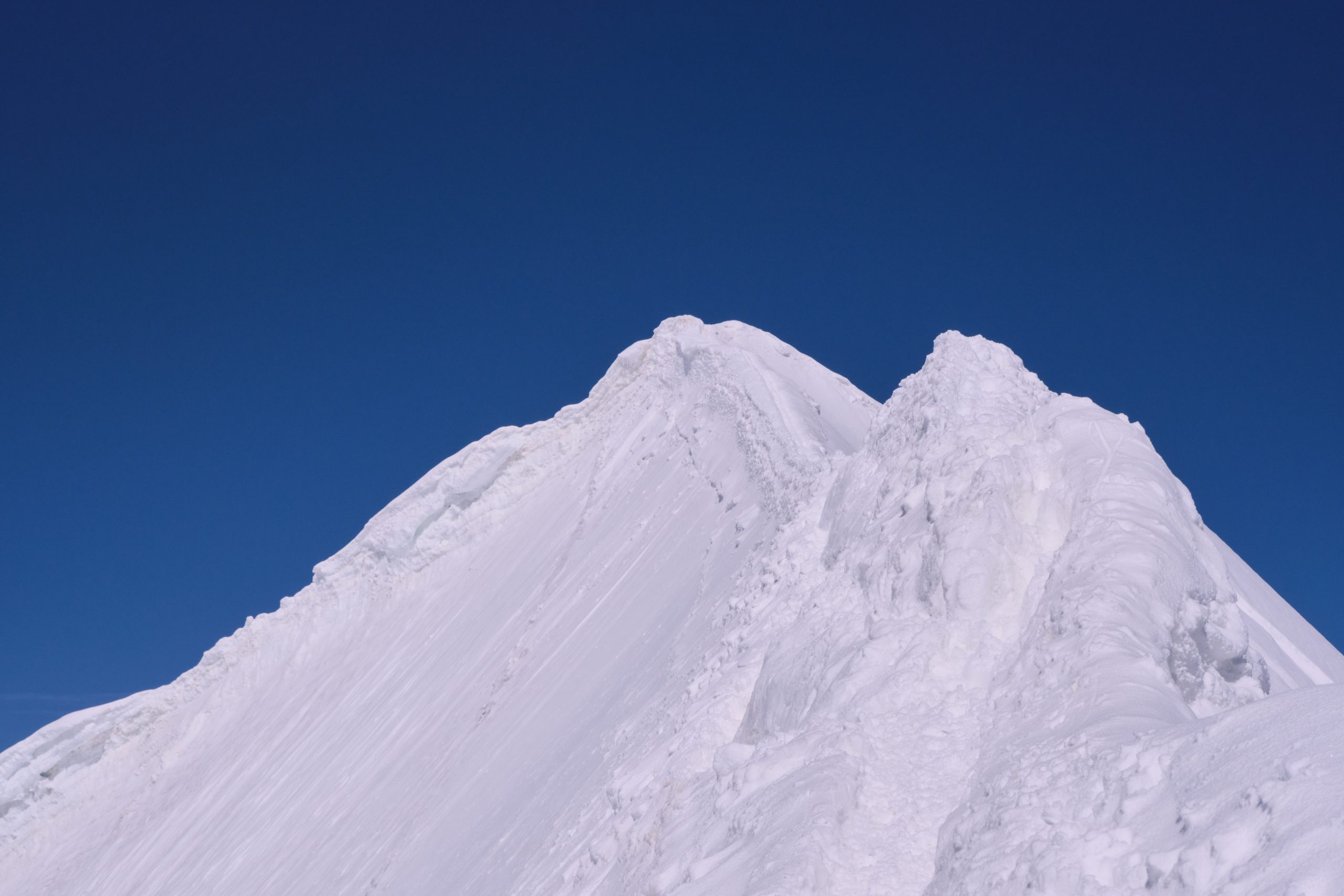
The sun burned hot, and the celebration was short lived. With every passing moment the snow was becoming softer and the ridge more dangerous. On top of that there was a group behind who had started along the narrow arete. Passing one another would be a tight affair. After only a few short minutes on the summit I started back down. A slowly worsening altitude headache began to develop as I picked my way down across snow and rock. Almost exactly four hours after I had left the Jungfraujoch I was back among the hordes of tourists.
Proper gear in the mountains is always a necessity. I had brought all my climbing and glacier gear over from Canada but the one thing I still don’t possess are Mountaineering boots. The stiff soled shoes necessary in adventurous alpinism. My boots were leather hiking boots with rather stiff soles but certainly not the technical boot everyone else was wearing. While important to wear the right gear, on a climb of this difficulty, the difference between my boots and mountaineering boots was not going to make or break an ascent. They had very little, if any impact on my safety. That being said, if anyone happens to have a pair of Scarpa Phantom Techs they just want to give away I volunteer my wardrobe space. However, there was one lesson learnt and I regret not thinking of it before hand. I should have worn a harness. In case of emergency it makes is infinitely simpler for me to tie in to a rope or for rescuers to retrieve me. While it was far from necessary, its good practice.

It was a very fun climb, headache notwithstanding. Not very difficult but comfort with exposure was a necessity. Once back at the Jungfraujoch, determined to get my money’s worth out of the 117CHF ticket, I went to all the various attractions. My headache then became slightly unbearable, so I headed back to Bern to eat some Chocolate yoghurt and lie in a dark room. I think next time I’ll have to take the altitude a little more into consideration. Next year Matterhorn?