Mount Baker
Via Easton Glacier
August 29-31, 2022
I am pleased to announce that Amanda and I are now international mountaineers! While most certainly an over exaggeration of title, it is far from an over exaggeration of excitement. Ever since that dangerous idea to make the jump from hiking to mountaineering first popped into my head, Mount Baker has been on the list. It is THE beginner summit and, as one of the most heavily glaciated peak in the lower 48, of course we had to climb it.
Growing up in Vancouver we would always spot Baker in the distance, looming up from the horizon; weather permitting of course. But on those clear days, Baker stood as a monument, isolated, giant, snowy, dangerous. I had never actually seriously considered climbing it till last year when, of course, the moment it was suggested we began making plans. No surprise that the second an idea pops into our heads, we’re off to do it no matter how silly (see Juan de Fuca). COVID restrictions were slowly lifting and Canada planned on opening up the border to the US. We had predicted that the states would do the same, so we fully expected to go. Unfortunately, despite Canada’s COVID concessions, the US did not follow, preventing our plans from becoming a reality. It was a blow, but probably a good thing. Truthfully, we had done very little in the way of actual planning.
A year went by and we certainly were not going to let another one go so late in August we set off. This time we were actually prepared. Unlike our previous mountaineering outings on Garibaldi and Wedge, we were properly equipped with all the necessary gear and knowledge for a potential crevasse rescue. We had even practiced twice in my backyard. If we weren’t serious before, we were certainly serious now.
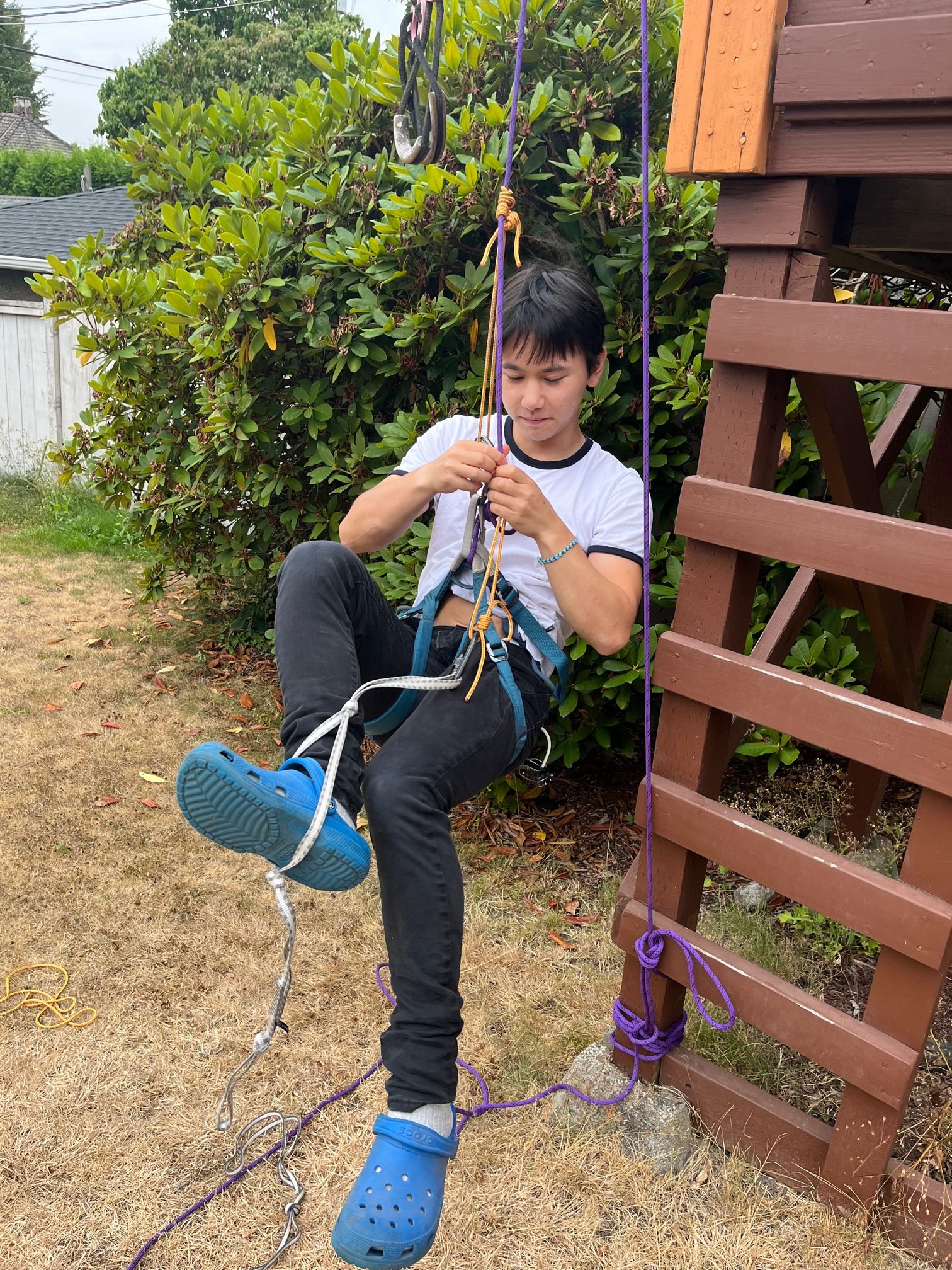
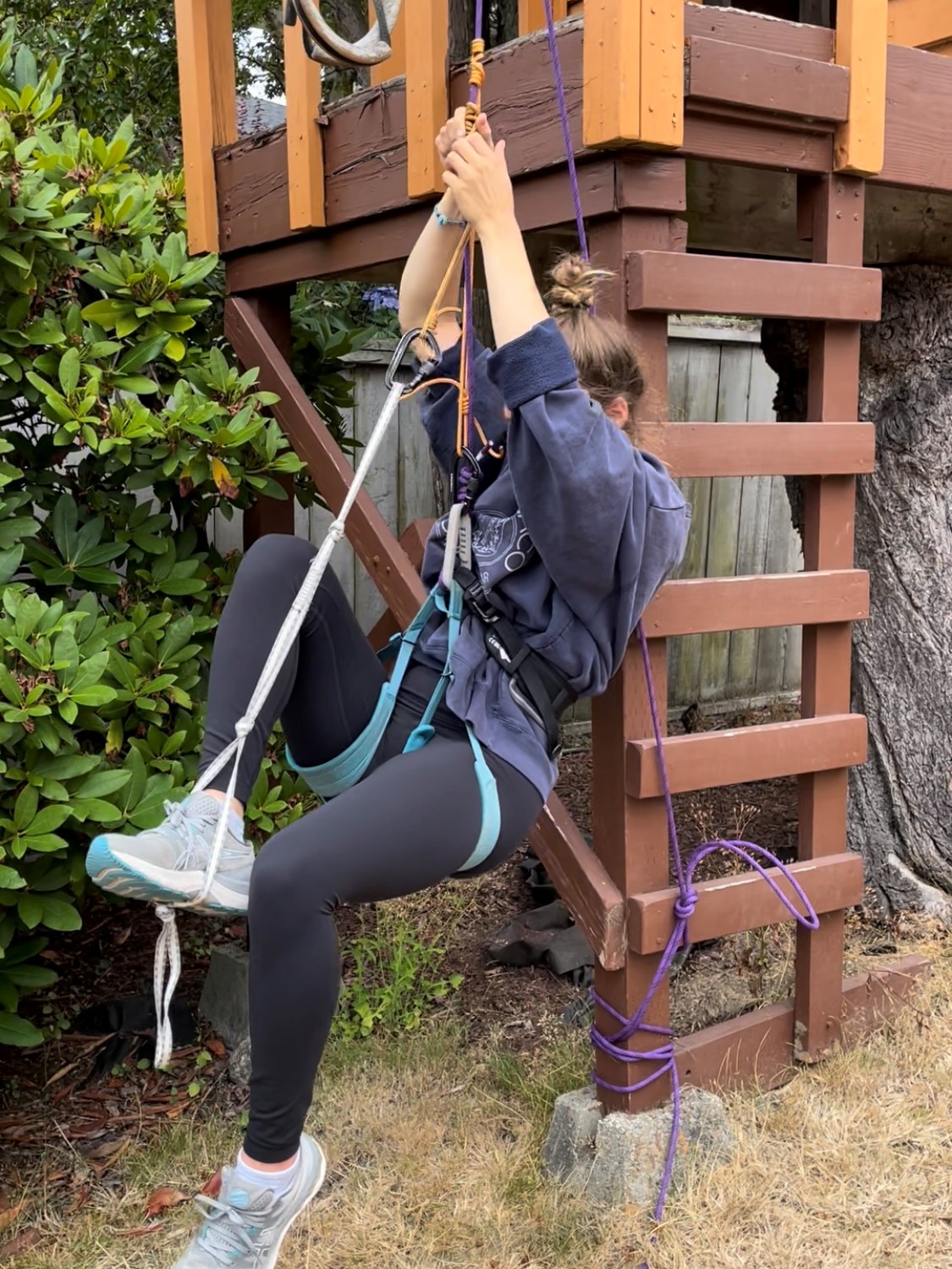
My initial plan was to ascend Coleman Glacier, the classic beginner route. Fortunately, while scanning Facebook trip reports, I managed to catch that the logging road access was washed out and would add a considerable distance to the trip. In light of this, I decided on the second standard easy route: Easton Glacier. We didn’t fully know what to expect and since we had three free days, we decided on a three day trip. Our rough plan included a late start to Sandy Camp, messing around in snow to practice glacier stuff the next day, then the day after that summiting and heading back to Vancouver. Little did we know it all could have been accomplished in a single day without considerable effort.
Crossing the border was a breeze and with a quick stop for food and last minute gear, we were up the logging road and at the parking lot in no time. Sorting gear and packing up, I realized I had made a critical blunder: I forgot to bring my snow picket.
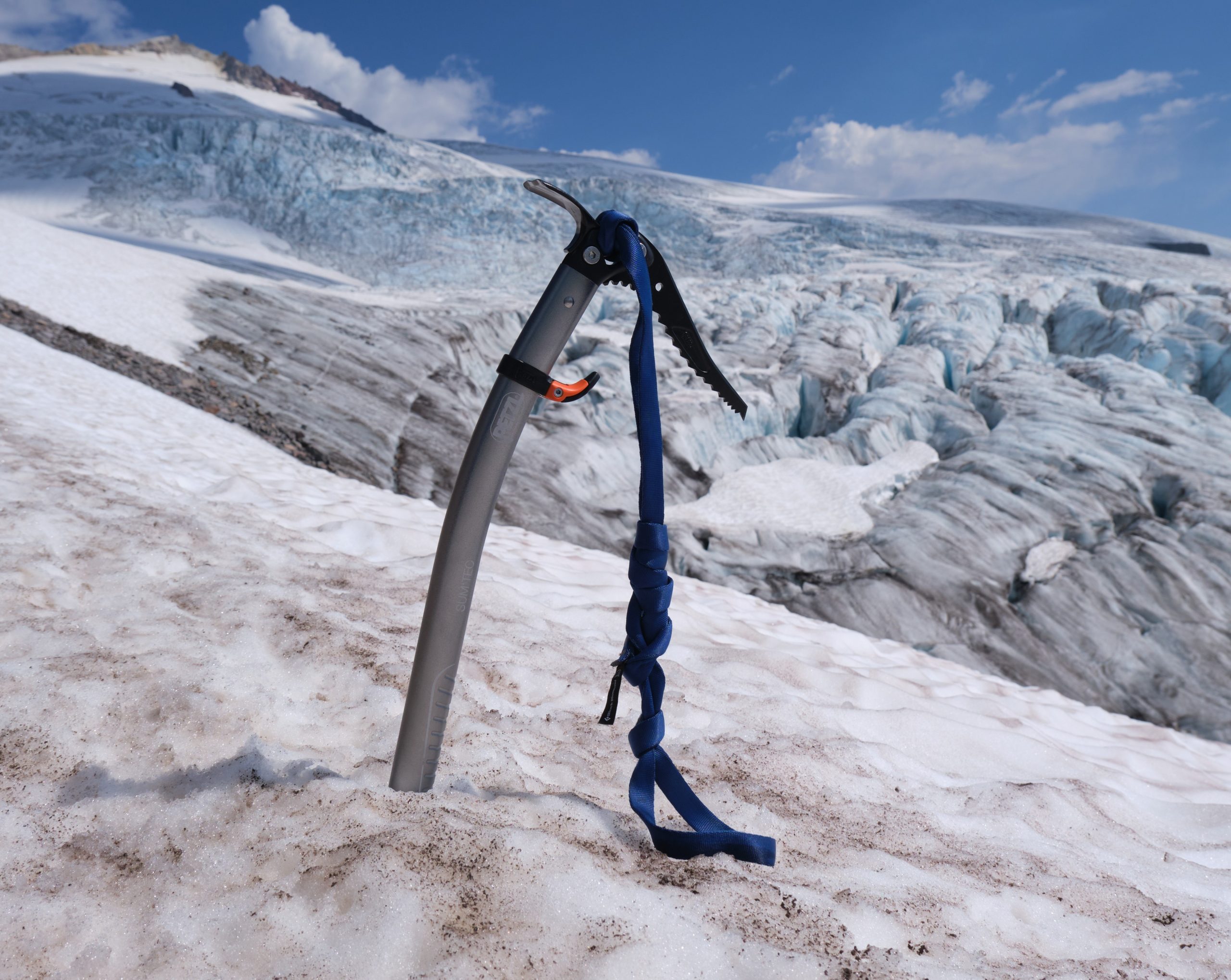
Now a brief interlude for those of you who may not know what a snow picket is. A snow picket, as its name might suggest, is a piece of equipment shaped like a picket and meant for snow. Aluminum, 50-60 centimeters in length, and fairly light, it is meant as an anchor to hammer or set horizontally into the snow. Onto this picket, you place the weight of anyone who might have suddenly and accidentally found themselves in a crevasse. Because you are roped up for glacier travel, you want the unlucky partners weight off of you and onto the snow set picket. Despite the often fluffy depiction of snow, it really can provide a rather strong anchor. From there, the fallen can haul themselves out, or if they happen to also find themselves so unfortunately injured or unconscious, you can haul them out. As you can see, this snow picket is a crucial piece of safety gear.
After a brief debate on whether we should continue without the picket, we decide to descend. My low spirits lowered as we sped down the logging road towards the inspiring town of Concrete. Very lucky for us, there was an outdoor store not too far away in Sedro-Woolley, so we made our way into the small town as night was falling. The store would open the next morning at 8. In need of food and water, we headed to the nearest box store to fetch the essentials. Soon we were downing a pint of Ben and Jerry’s.
And so began another “Where do we park the car so that no one finds out were sleeping in it” kind of night. We drove the residential streets for thirty minutes until we circled round and found an out of the way spot that was really only two streets off from the main road sort of out of the way. Using what we had in the car, we managed to drape tarps and stack bags over the windows for a modicum of privacy. It was not a comfortable night. Two—maybe fully grown is a bit of an overstatement here—people and two 60 litre bags crammed into a small Audi hatchback. Not recommended.
At dawn we tumbled out of the small car and headed over to the outdoor store. It was located on a street of old preserved small-town storefronts. Single story wooden facades which I imagine once bore words like “Saloon” and “General Store”, now boasted names of cafes and insurance agencies. Beset by the state only “sleeping in a cramped car in Skagit county” can offer, we wandered into the sole open diner which so happened to be two doors down from the outdoor store. We came upon a scene unseen in a big city. One large room with tables scattered around, upon each stood a small American flag right beside the ketchup and coffee creamer. Rectangular fluorescent lights were set into the white paneled ceiling. A single fan spun lazily. The walls were sparsely adorned with old photographs and an older very large rusting two man loggers saw. At the back stood a counter with two doorways on either side. One to the kitchen and one to the washroom.
It was reasonably lively. Tables of farmers, small town folk, people with large beards and flannel tucked into suspender held jeans sat in groups of two or three or four. It’s odd but perhaps not all that surprising that there really is a difference in appearance between those who live a rural life and those who live in the city. The way one dresses, one acts, the very lines on the faces are different.
We were greeted enthusiastically by the waitress then proceeded to eat a very large and satisfying breakfast with bottomless coffee which soon drove away any traces of sleep. Taking our time, we made our way two doors down and collected the necessary snow picket. Two hours later we were back at the trailhead parking lot and ready to go.
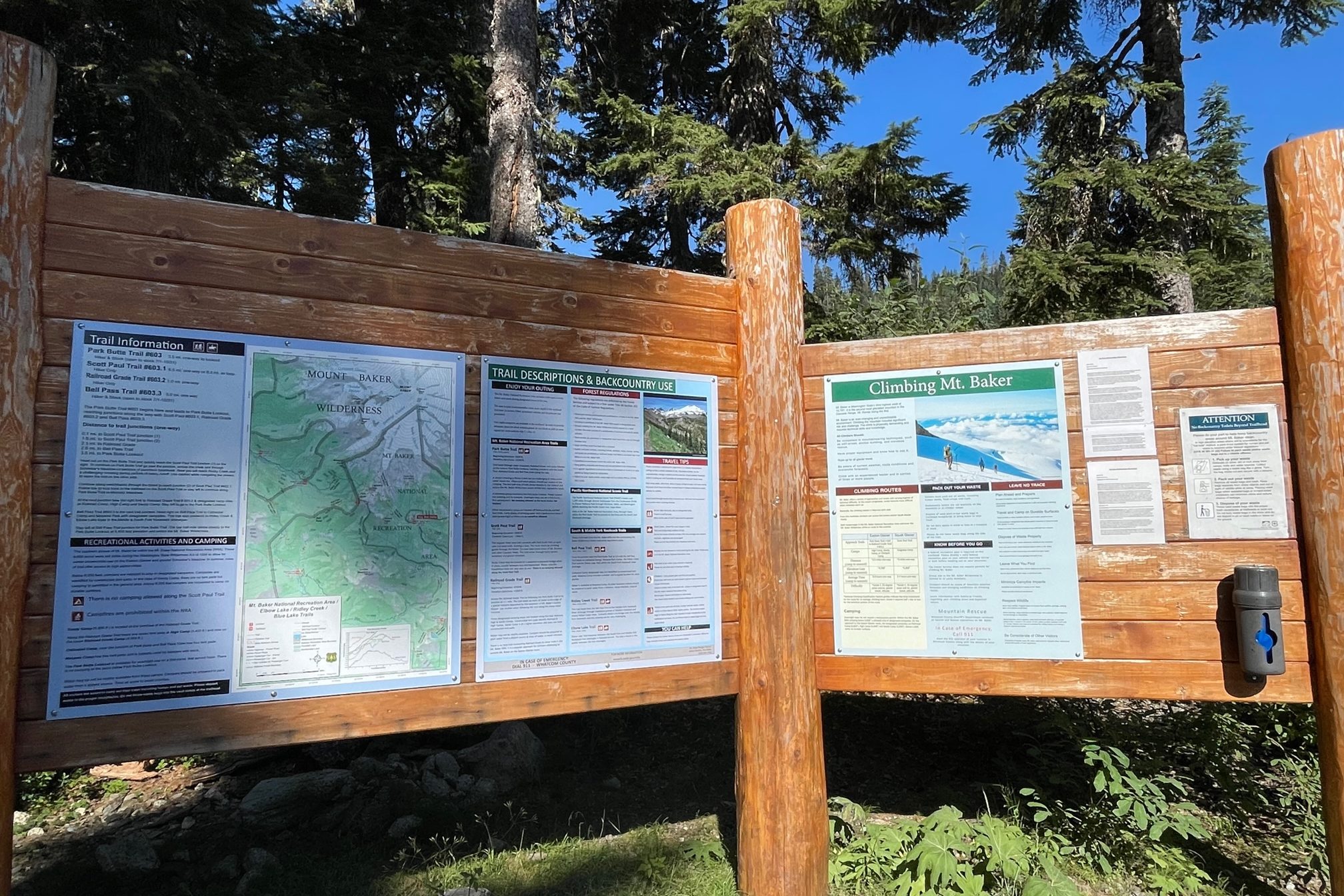
Setting off at 10:30 am, we cruised up the Railroad Grade Trail. A hint of smoke was in the air and as we climbed higher through the forest and into the alpine meadows, we saw haze in the distant valleys. I remembered Welch Peak from the year before and hoped the air quality wouldn’t deteriorate as far, but with the whims of forest fires and atmospheric circulation out of my control, I pushed it out of my mind and wandered onwards enjoying the beautiful weather.
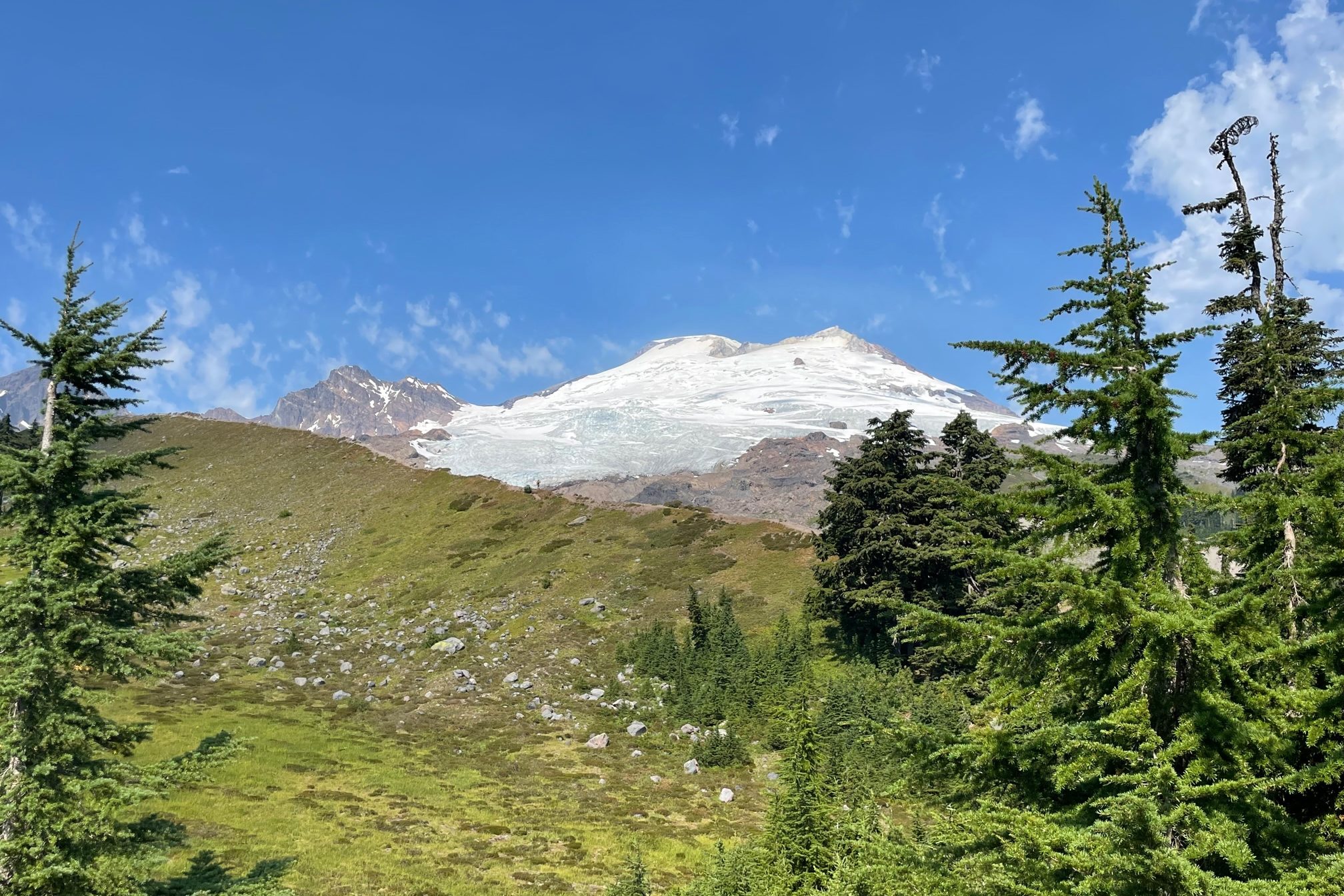
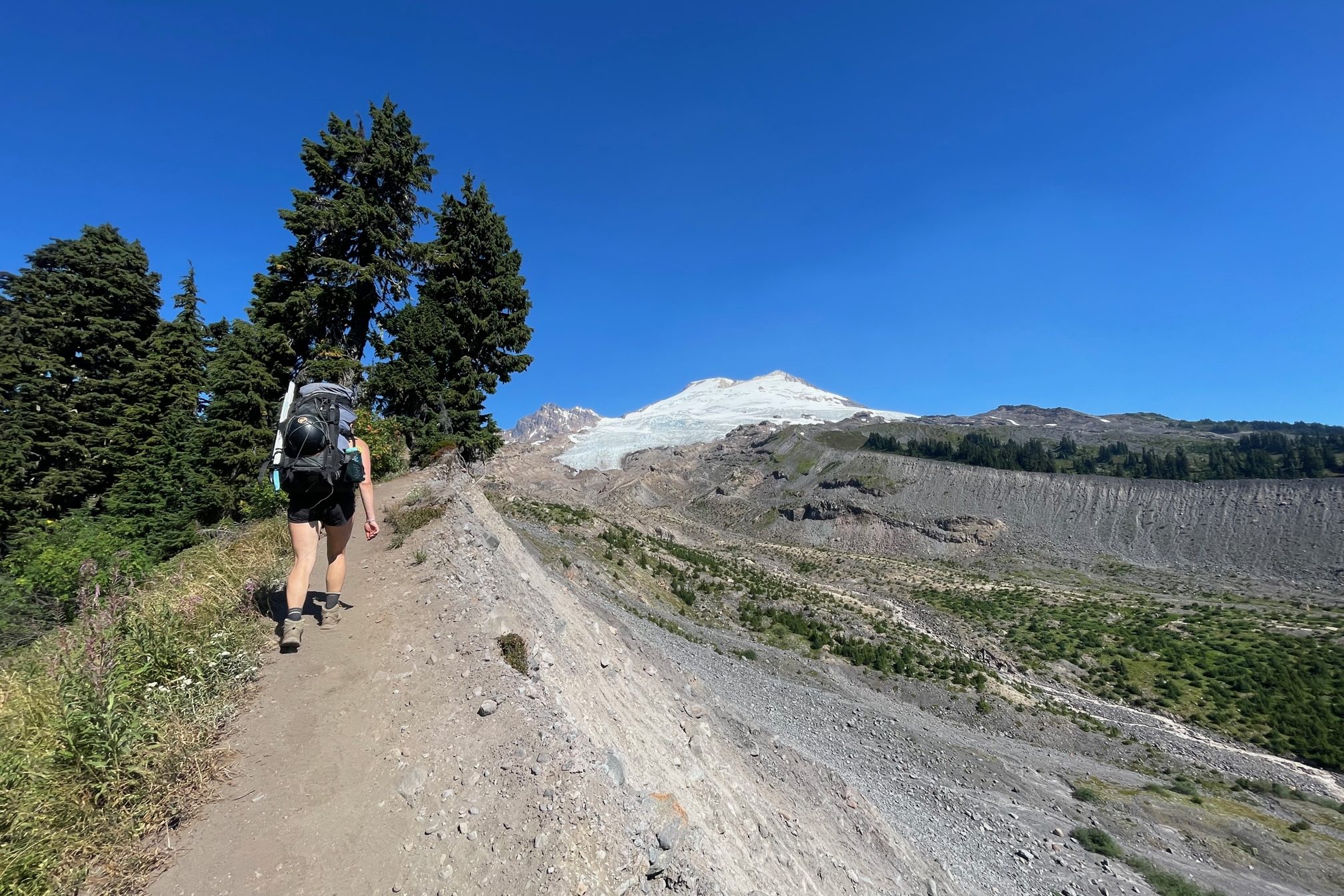
Our aim was Sandy Camp, a popular spot located right beside the glacier. Two thirds of the way there we came upon the lip of a massive moraine and stared down into the gigantic half pipe shaped path of the now retreated glacier. A river flowed down the length all the way from the foot of the glacier above us. Careful not to tumble down, we followed the edge upwards in an incline certainly steeper than its name, Railroad Grade Trail, would suggest. Cogwheel sure. But conventional rail, oh no. They’re only at a maximum grade of 10%…and those are for light trams. Large passenger trains? Less than half that. And cargo? A mere two percent at most. So, colour me surprised when we encounter a whole 20% grade heading up the moraine. Despite this, we make good time and reach Sandy Camp in a little over two hours.
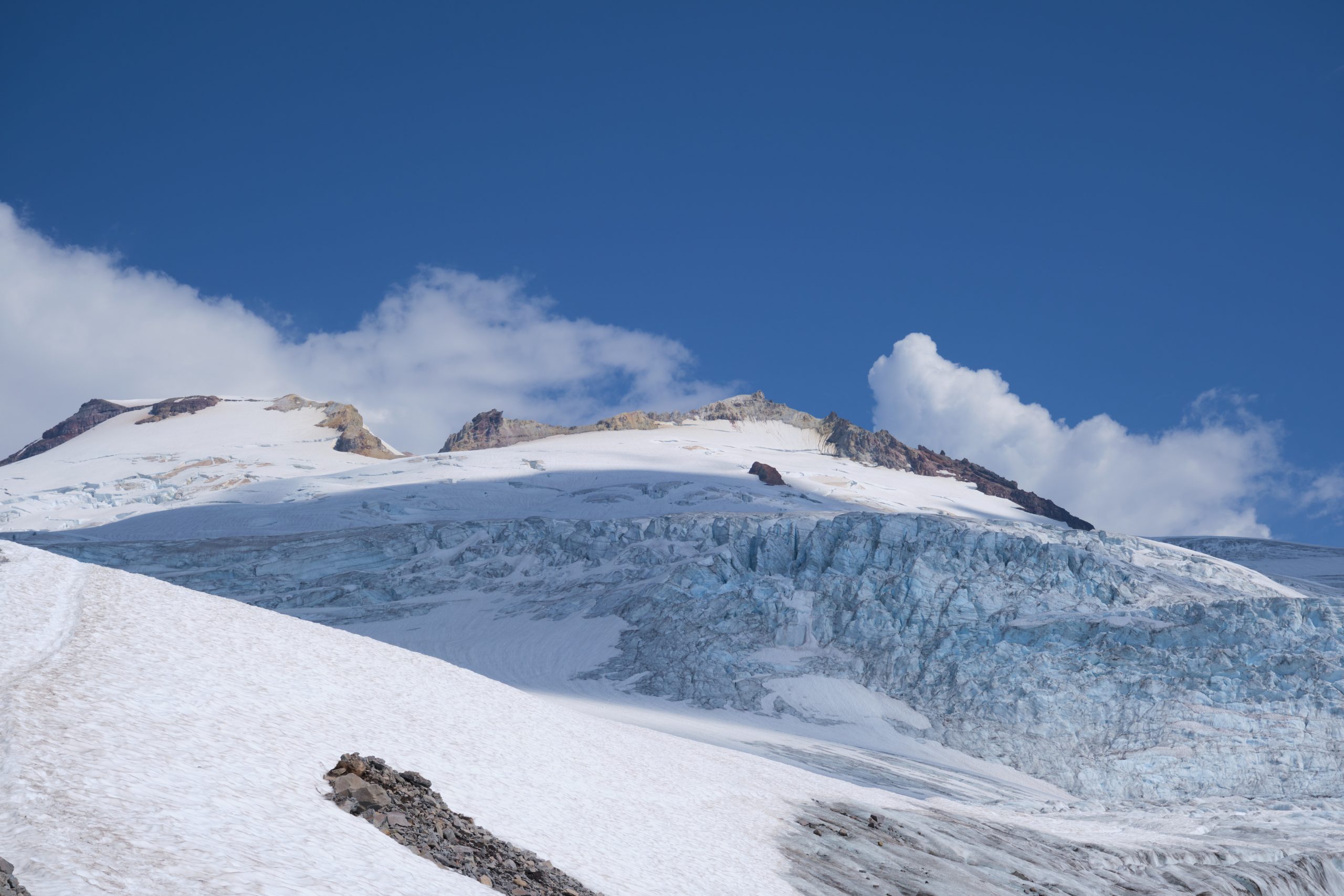
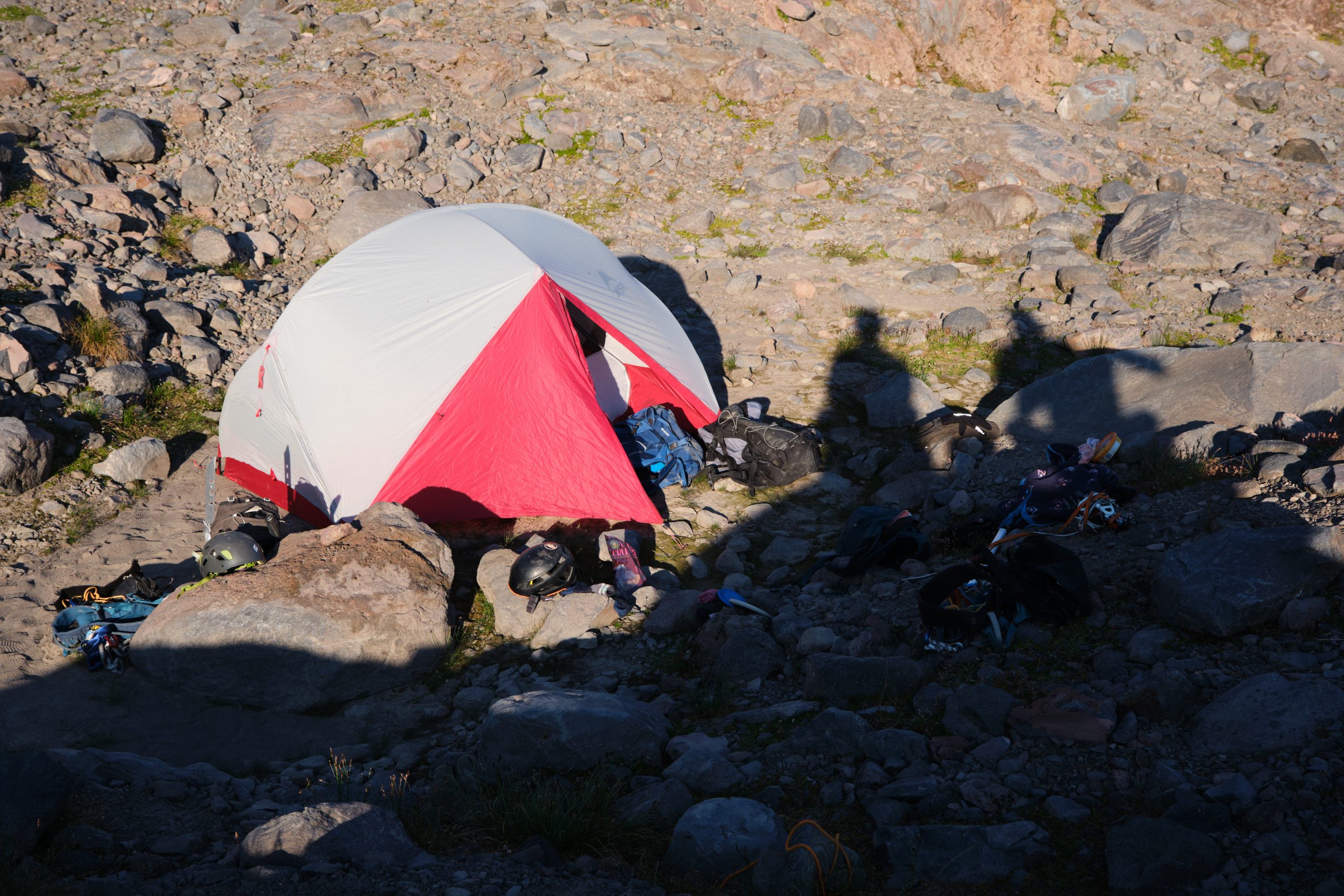
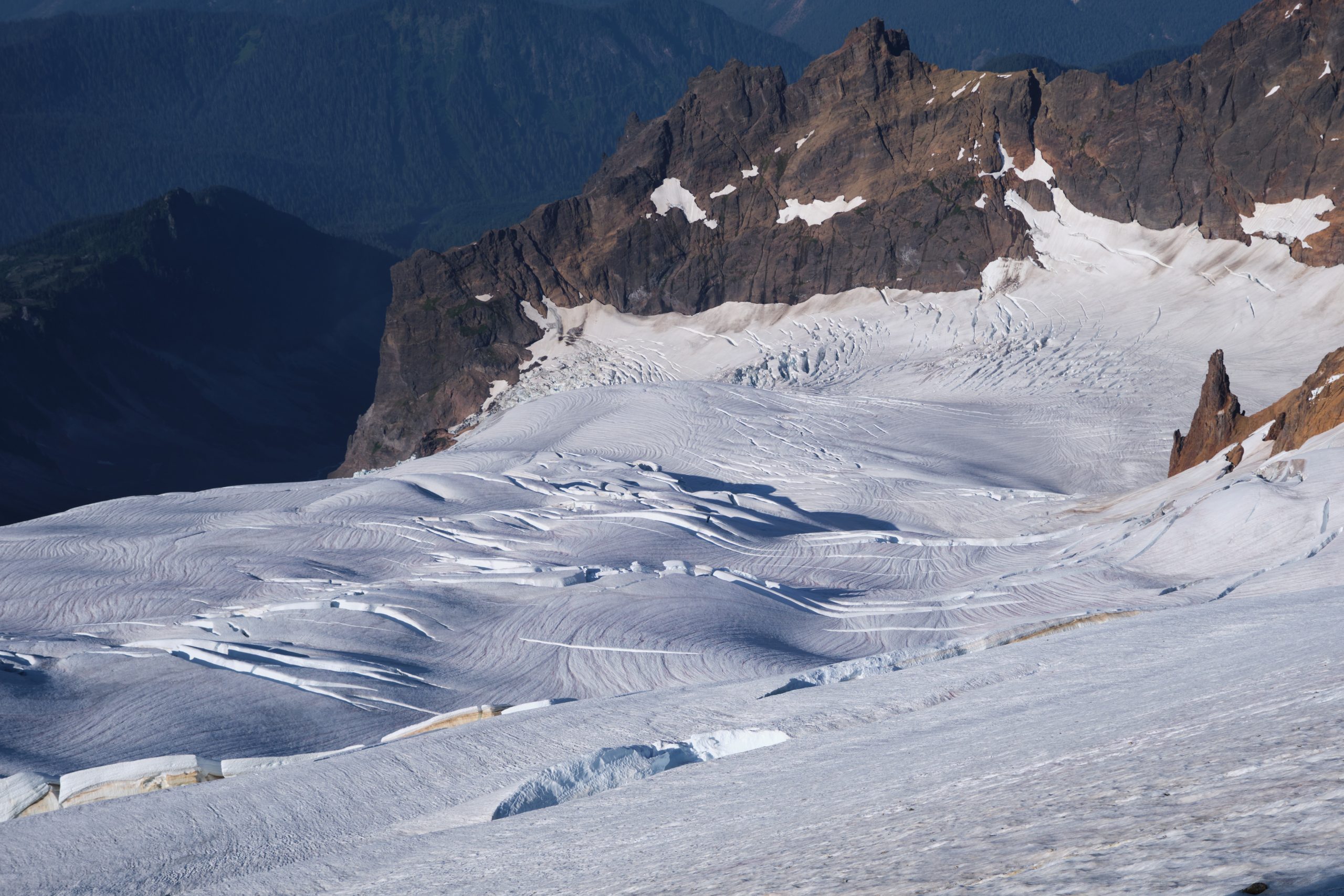
Dropping our packs, we found a campsite and set up our tent among the rocks. The sun beat down. It was early afternoon and there really wasn’t anything to do so we explored by climbing up a rocky ridge overlooking the glacier. In the distance, large seracs towered over the ice. Staring at the mountain, searching for our path up, a serac the size of a blue whale (or four reasonably sized Minke whales) crashed down in a terrifying spectacle. Fortunately, our route wouldn’t bring us right under them. Eating dinner beneath the setting sun, we realized we had forgotten to bring utensils. This was a far from a foreign issue for us so we went went about immediately trying to find the most ideal Annie’s Mac and Cheese scooping rocks without a second thought.
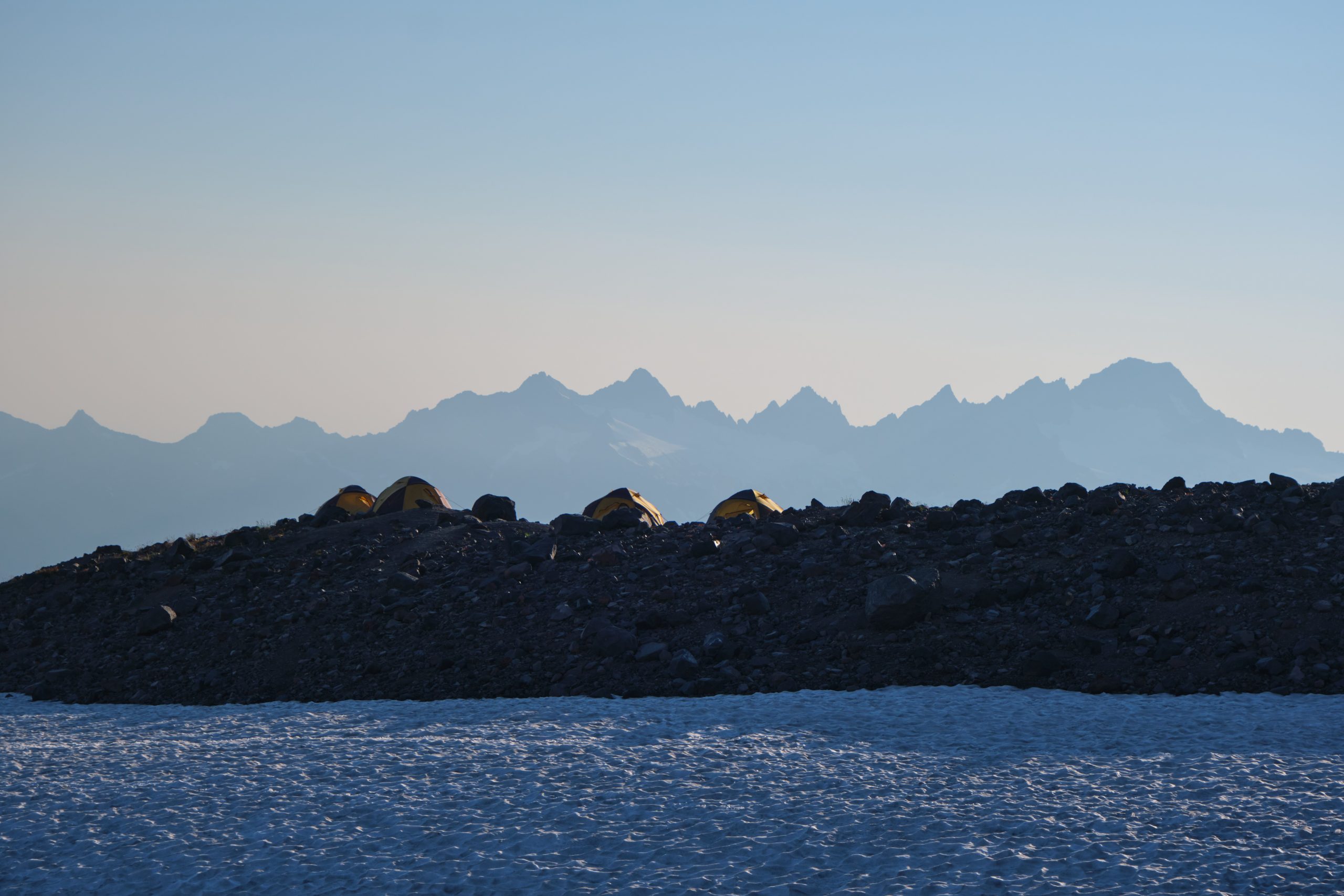
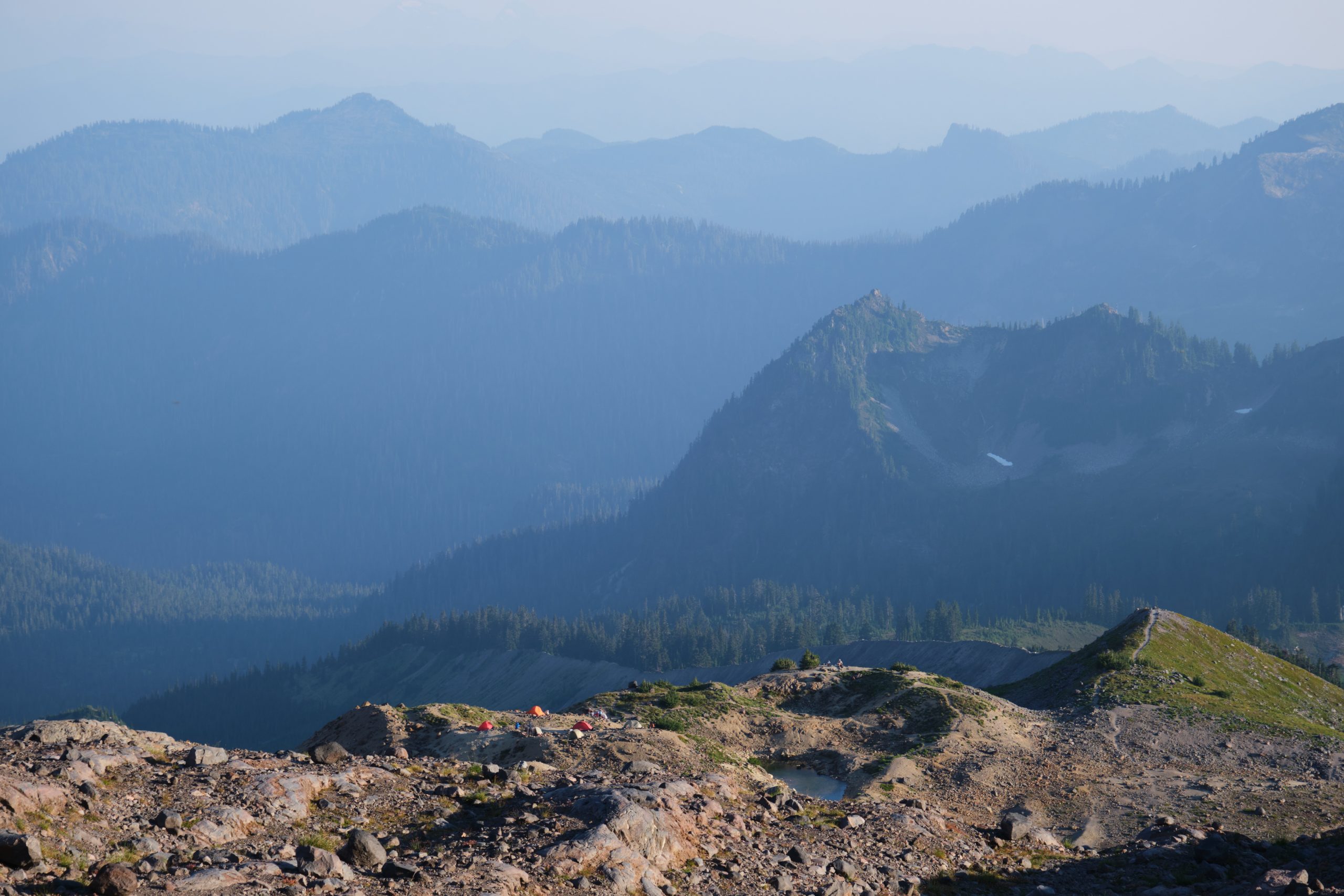
Our 3 am alarm blared forcing us reluctantly out of our warm sleeping bags. Stumbling out from our tent into the darkness of the night, we slowly made coffee and reconsidered our decision for such an early start. After a brief discussion mostly consisting of an exchange of tired looks, we decided to head back into the tent and sleep for another hour and a half. Pale light was just beginning to suggest an approaching sunrise as we awoke a second time and packed our bags. Heading over to the glacier, we adorned our gear and set out along the icy slopes.
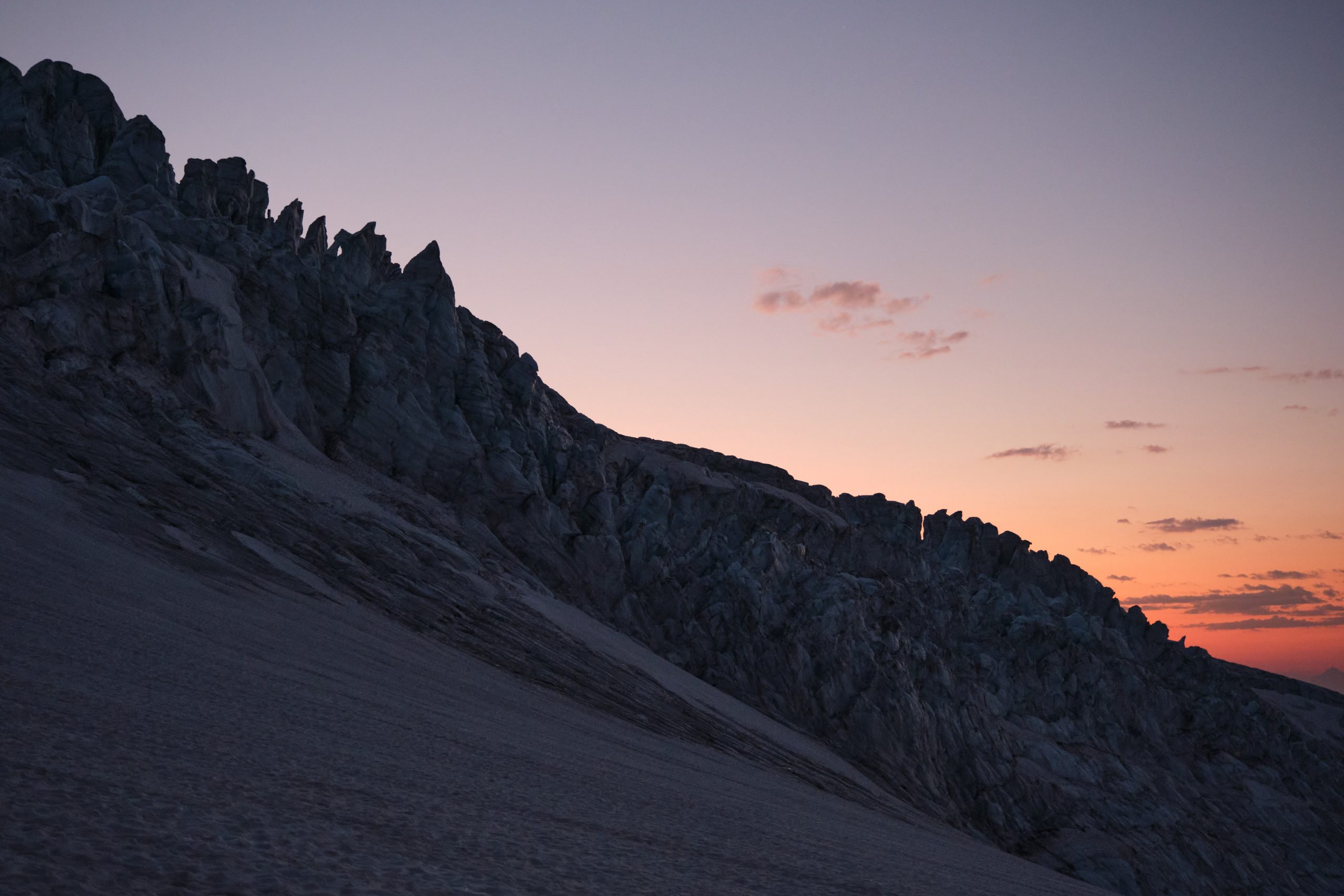
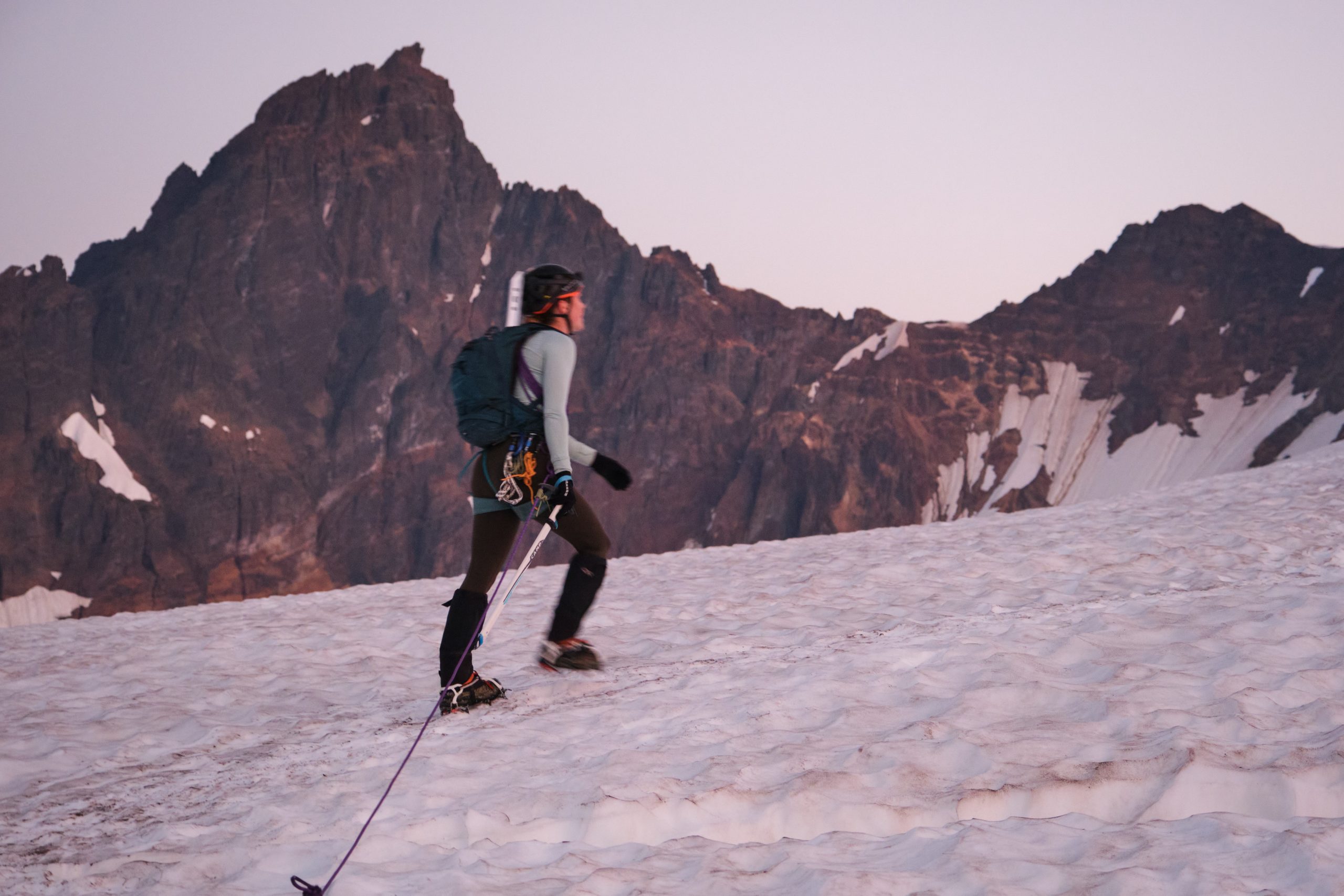
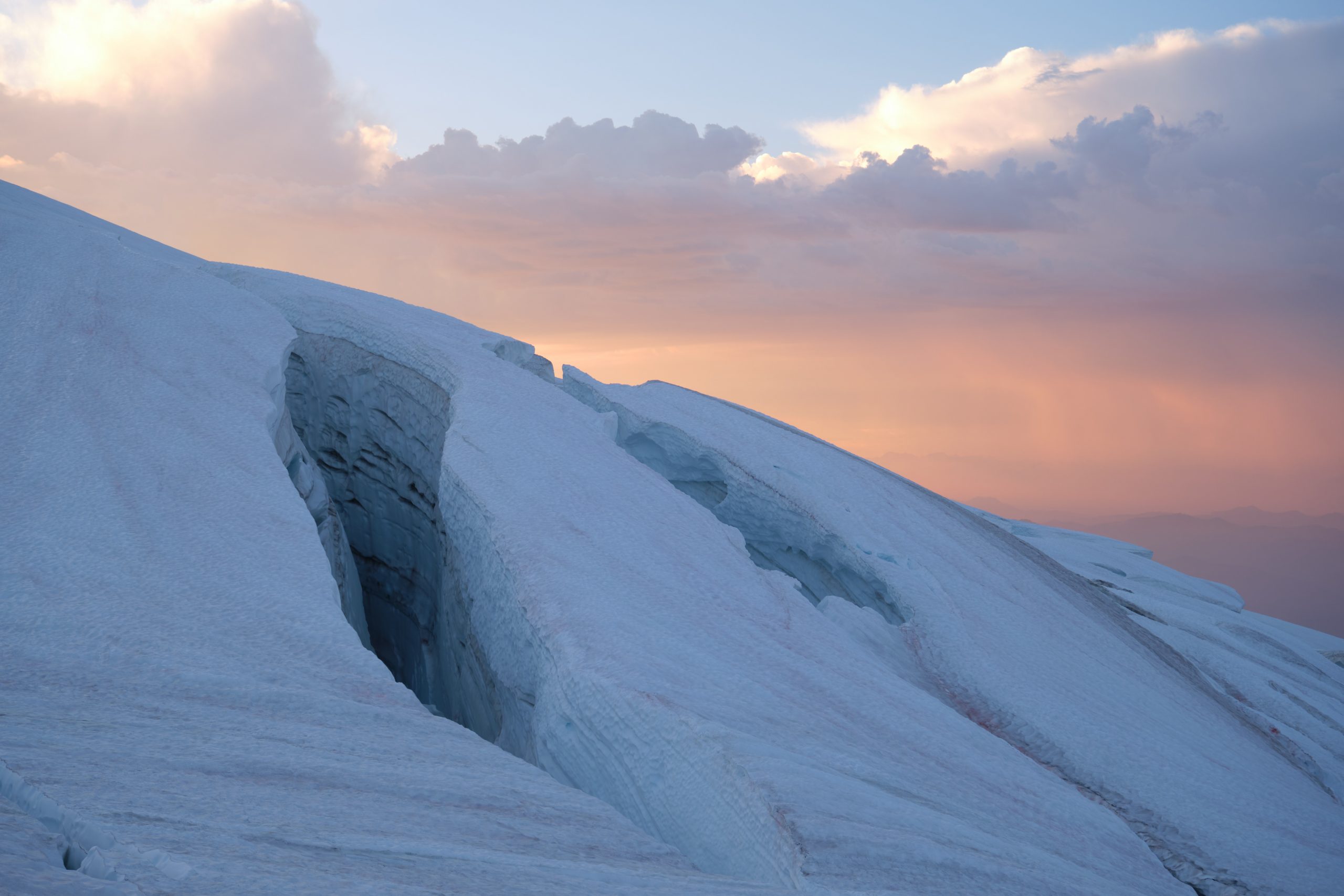
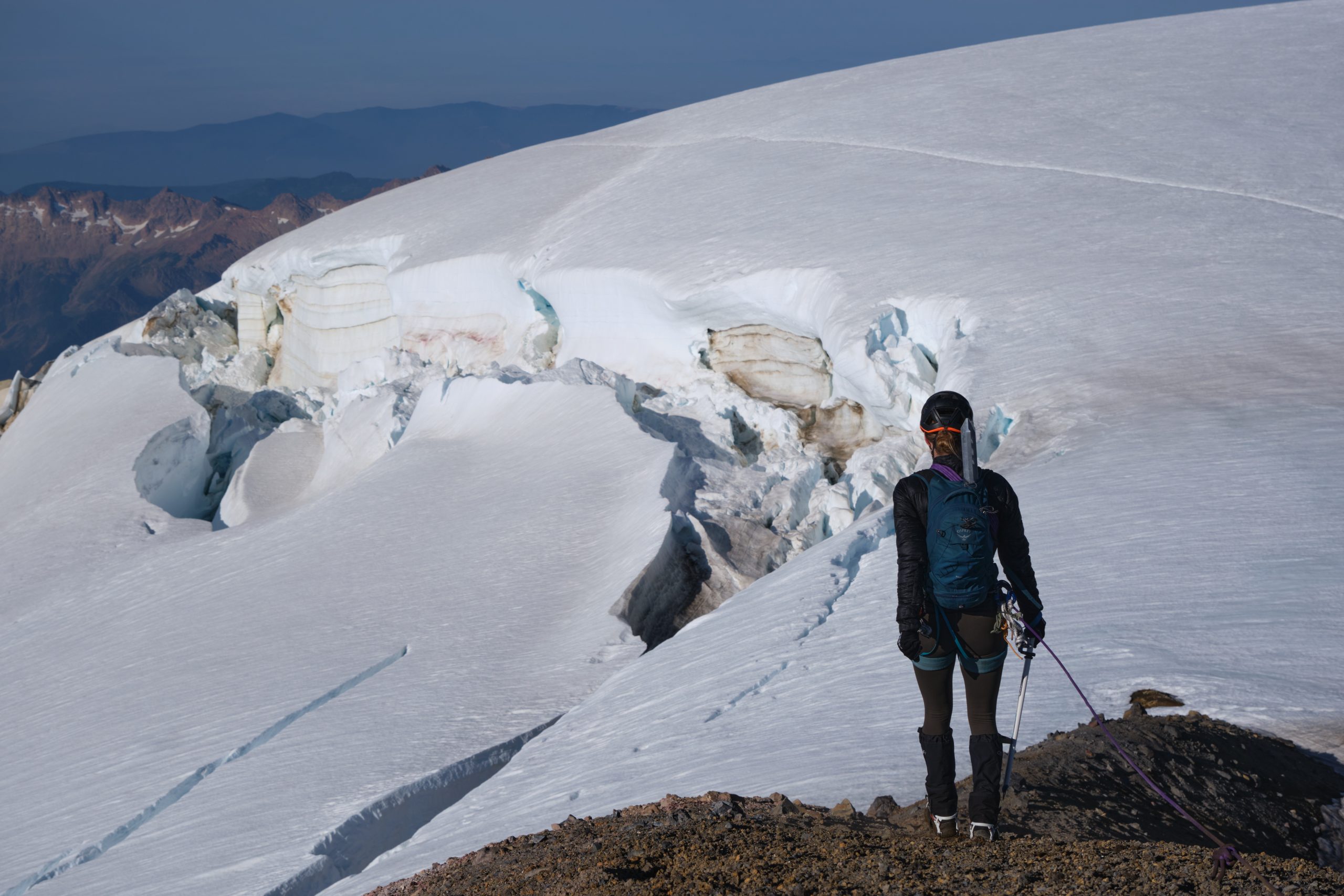
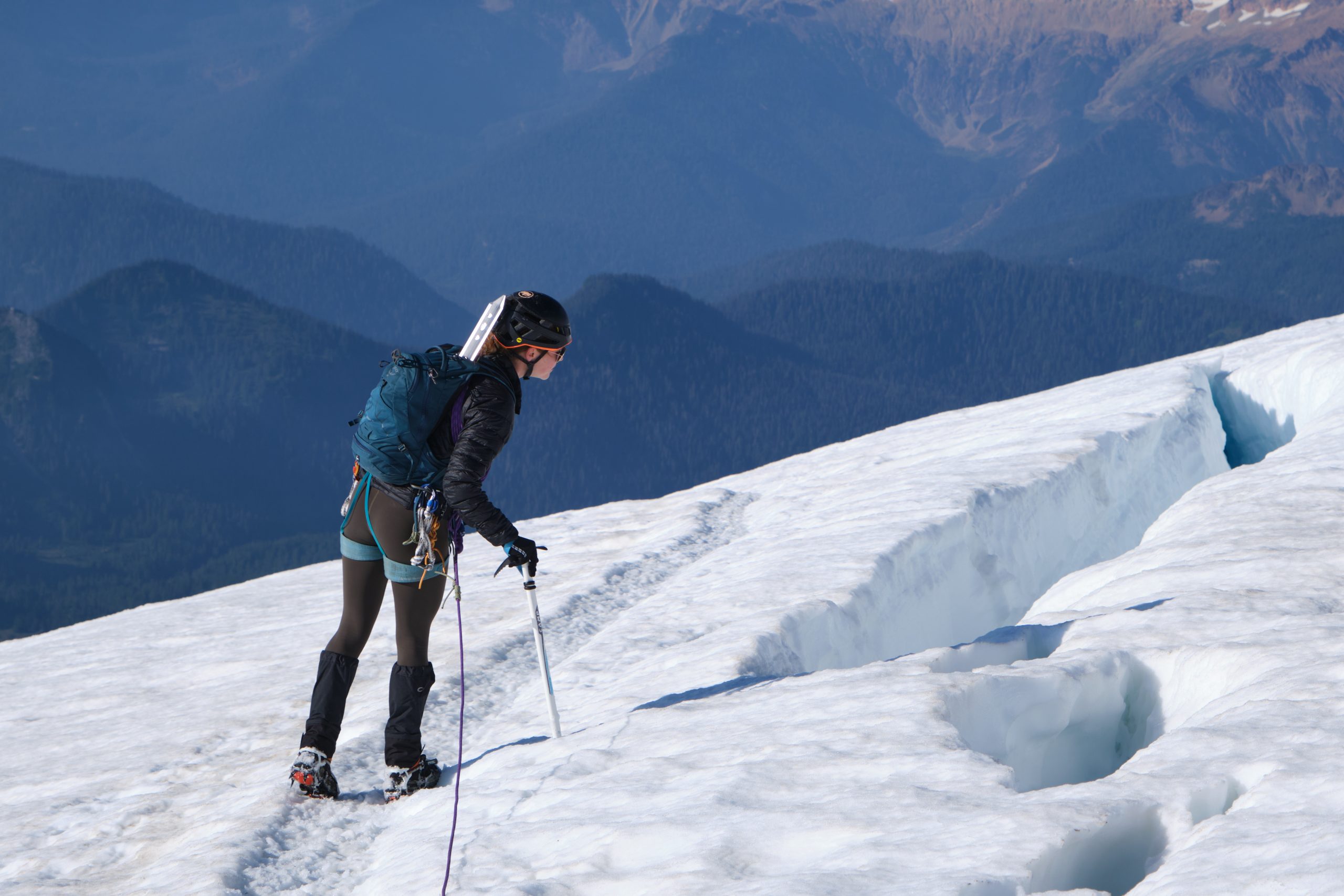
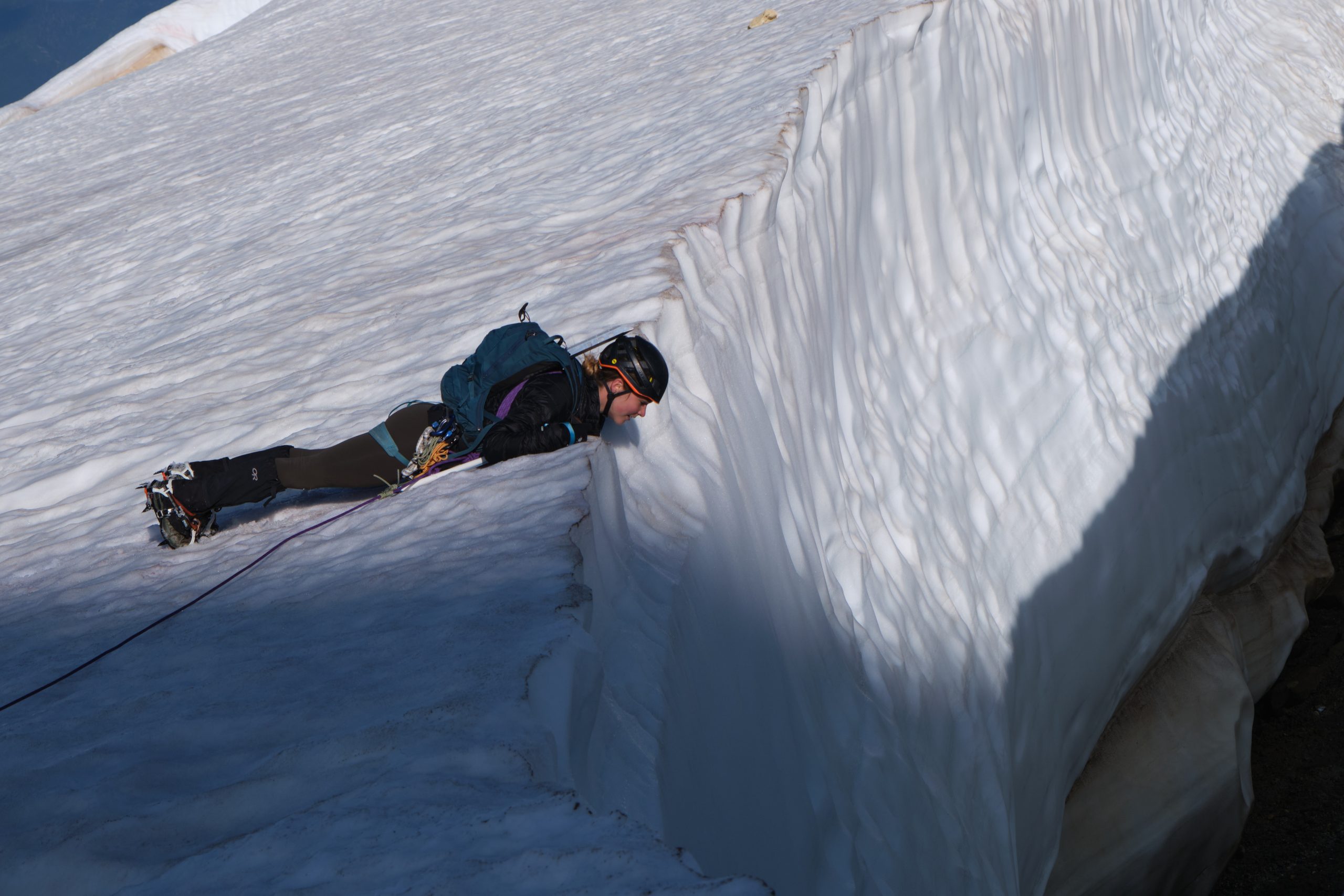
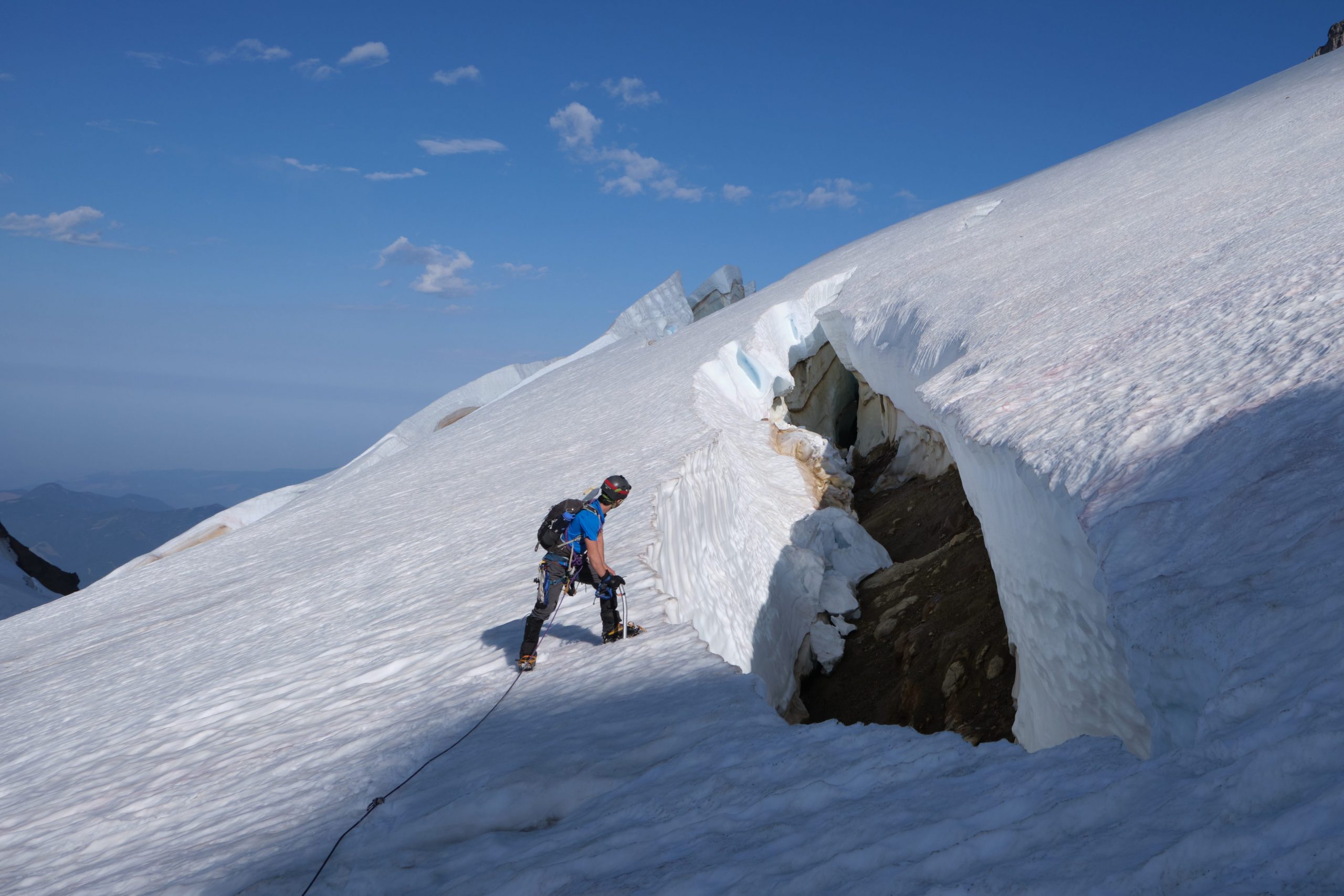
We were speeding along and by the time the sky was a brilliant orange and pink, our campsite was far below us. Massive crevasses split the snow on either side of us leading to unknown depths. It was amazing. This was our first time treading among these dangers.
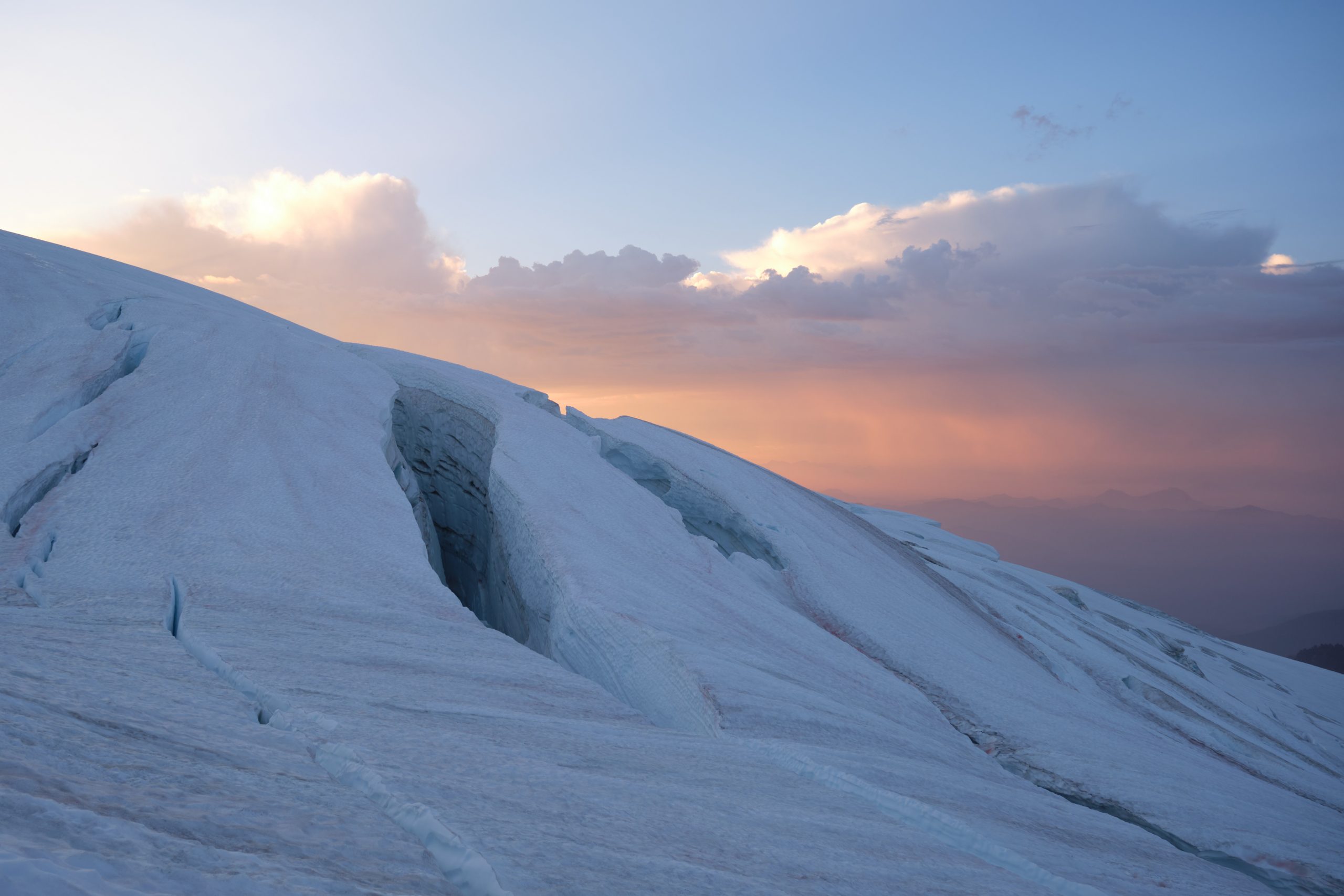
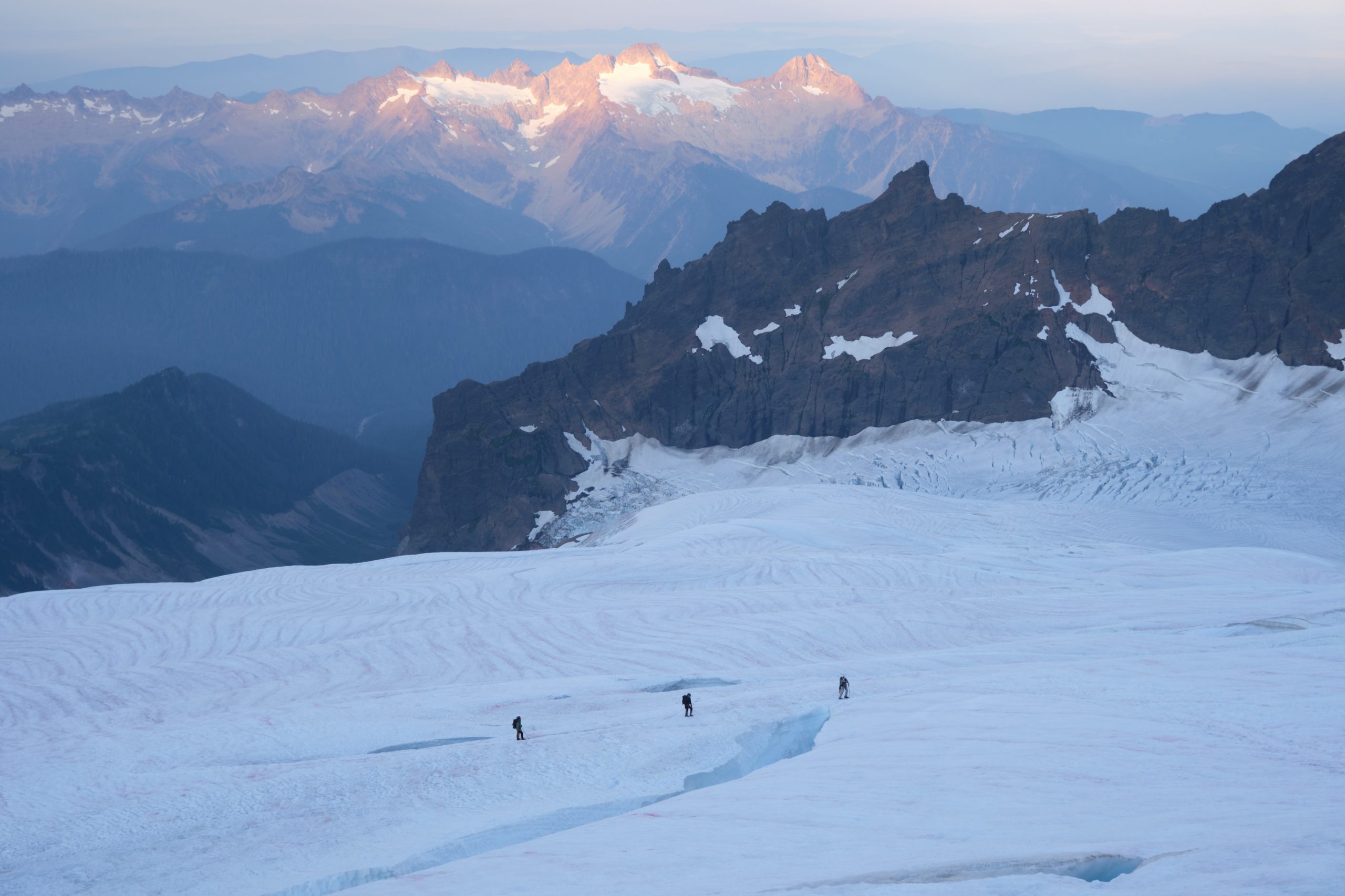
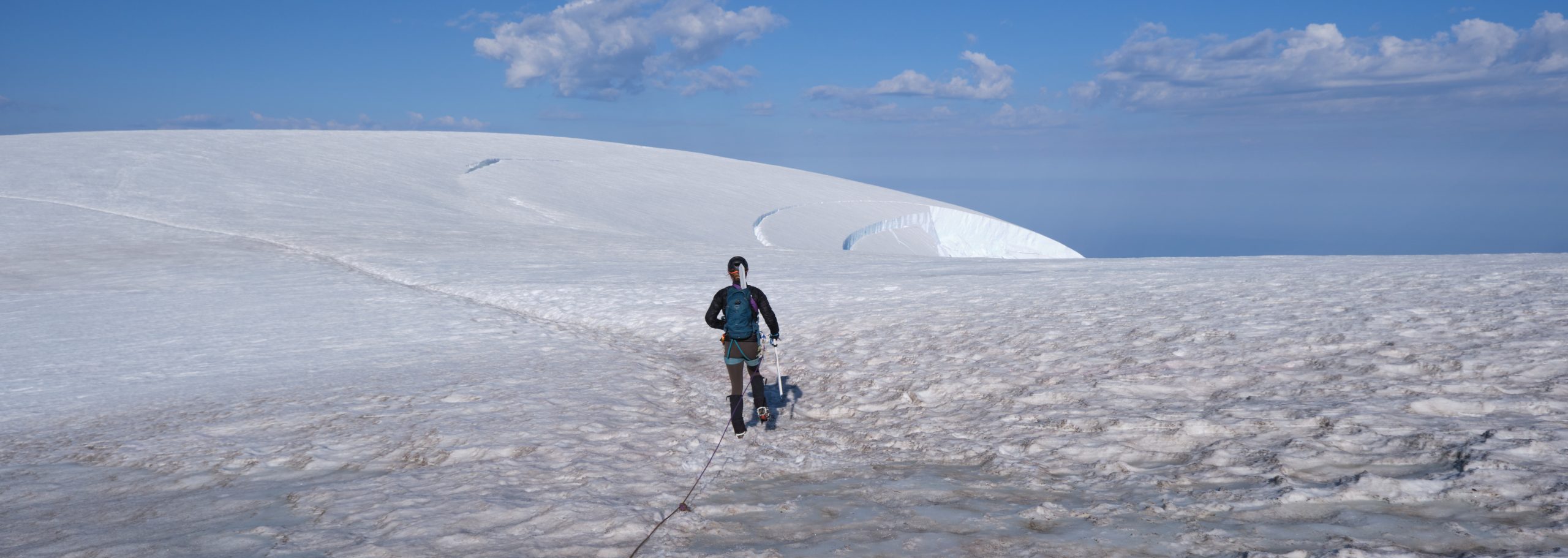
The whole climb was very straight forward. The path curved around seracs and threaded between crevasses. There were two other groups on the glacier. One had made the summit for sunrise and were heading down. Another consisted of three older folks slowly picking their way up. They had departed before us, but we soon passed them.
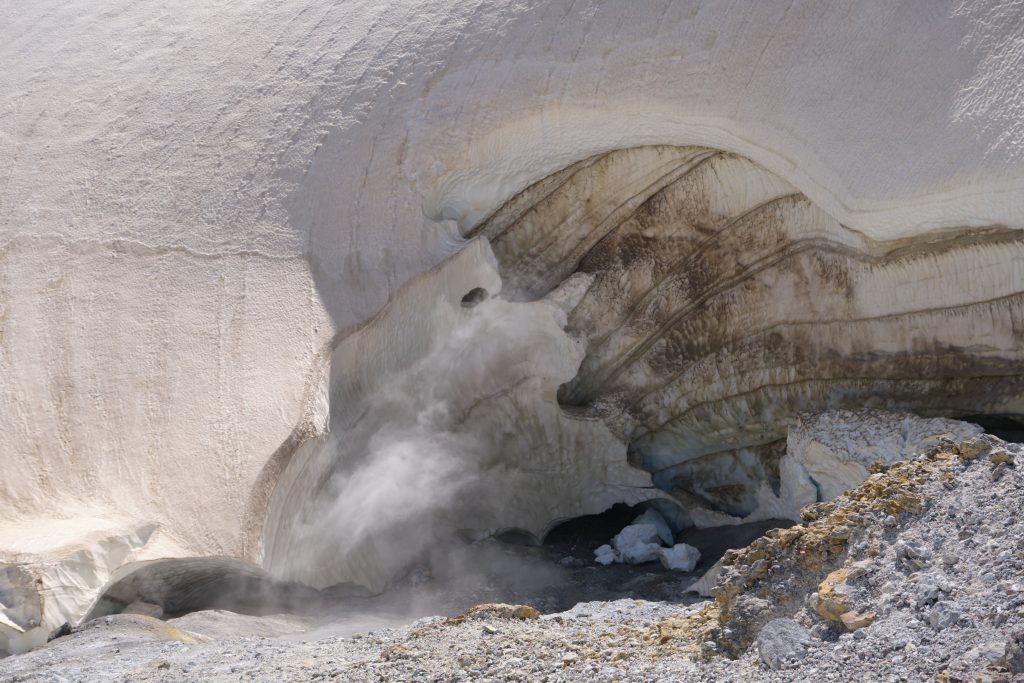
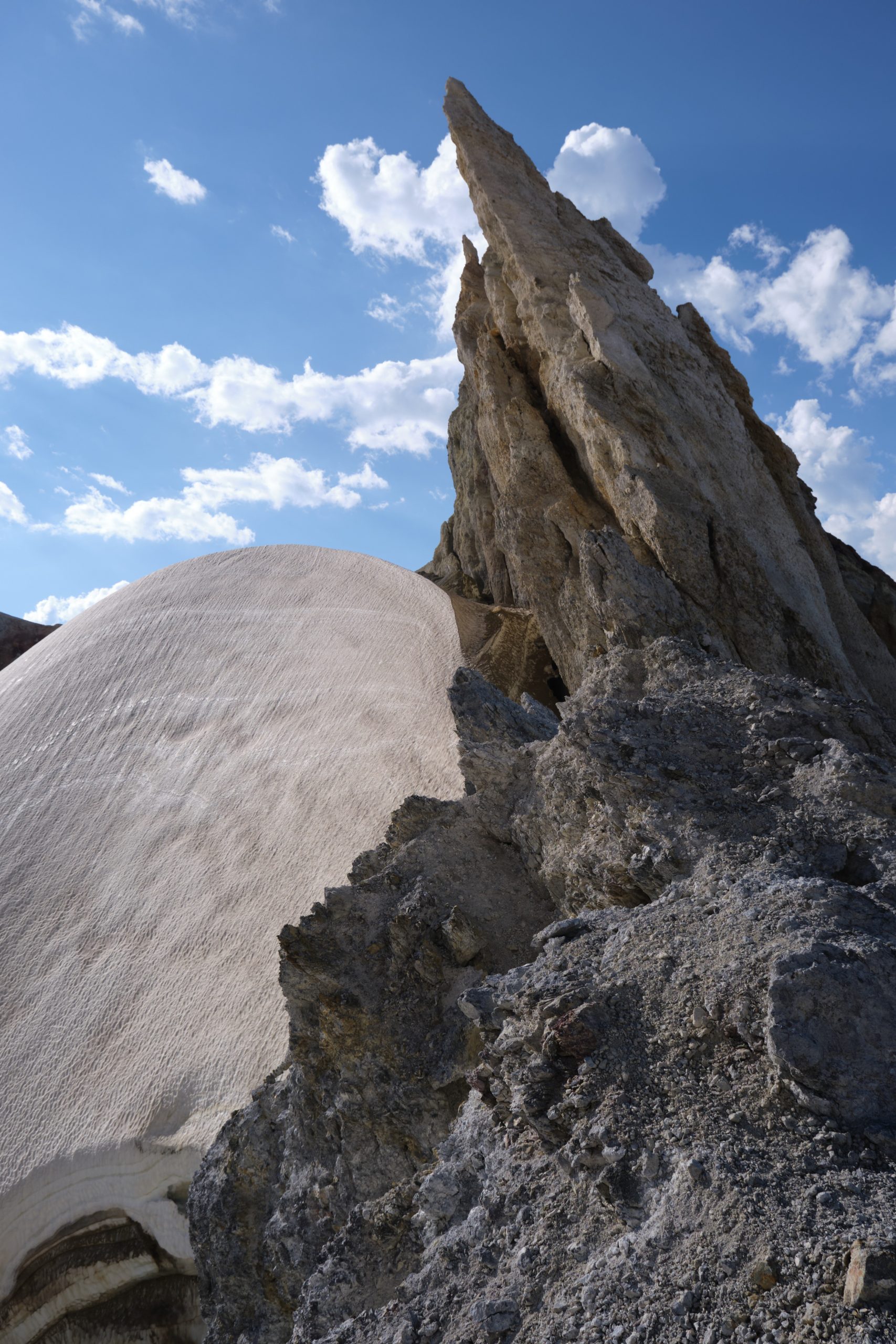
Before the final summit push, the path led us beside the rocky rim of the crater. The smell of sulfur weighed heavily in the air and a thin stream of smoke danced in the wind. We pushed on. Ahead of us the grade grew steep and footprints in the snow began to zig-zag their way up. We opted to cut across and climb straight up. By the time the slope flattened, my legs were burning and on the verge of cramping. We took a quick breather then made for the summit. We walked along flat terrain of wind swept icy snow wondering where the summit was. We were used to clear and relatively pointy peaks. This was a bit different. Coming into view was a black outcrop of volcanic rock barely protruding out of the snow. Was this the summit? Rather anticlimactic if you ask me.
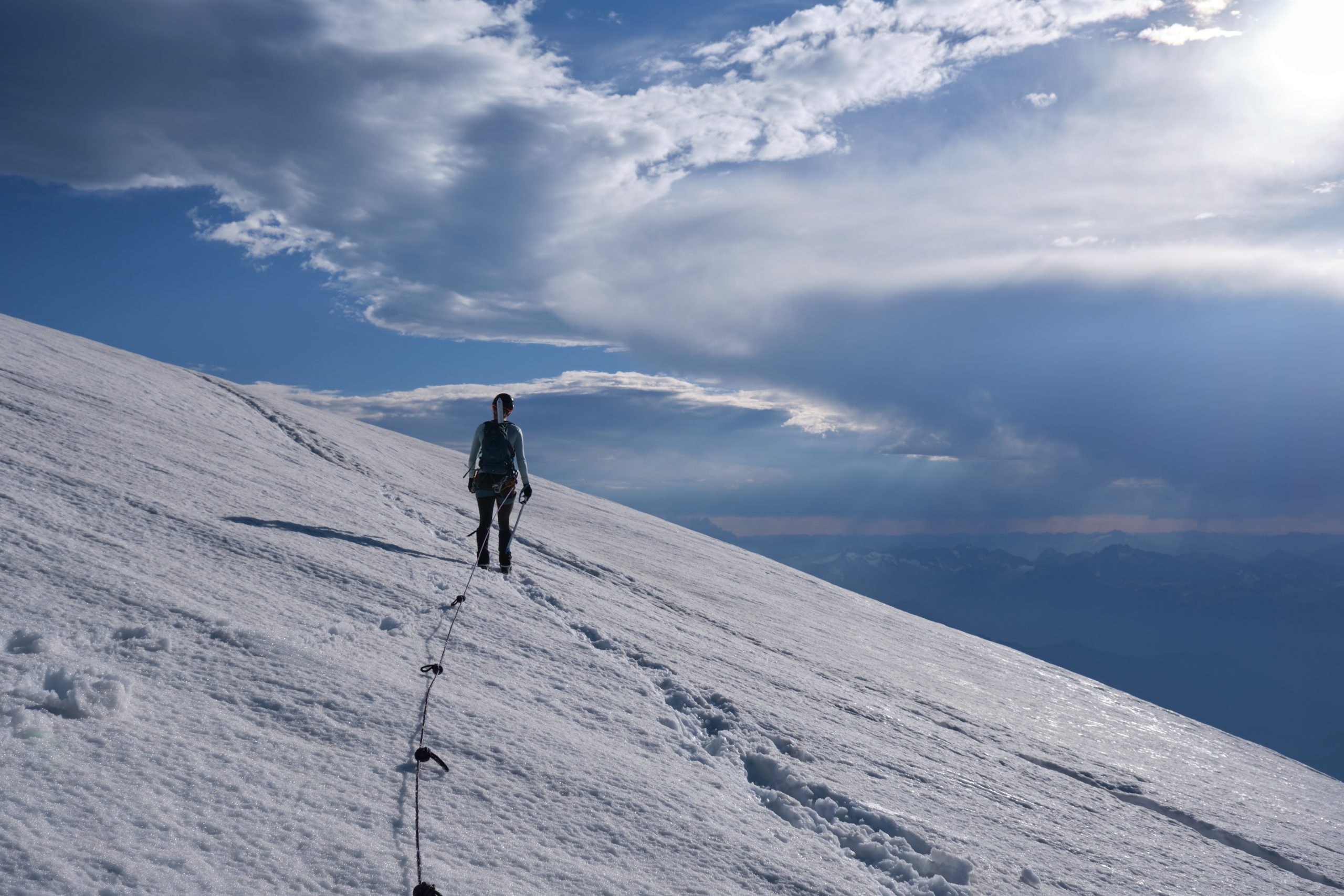
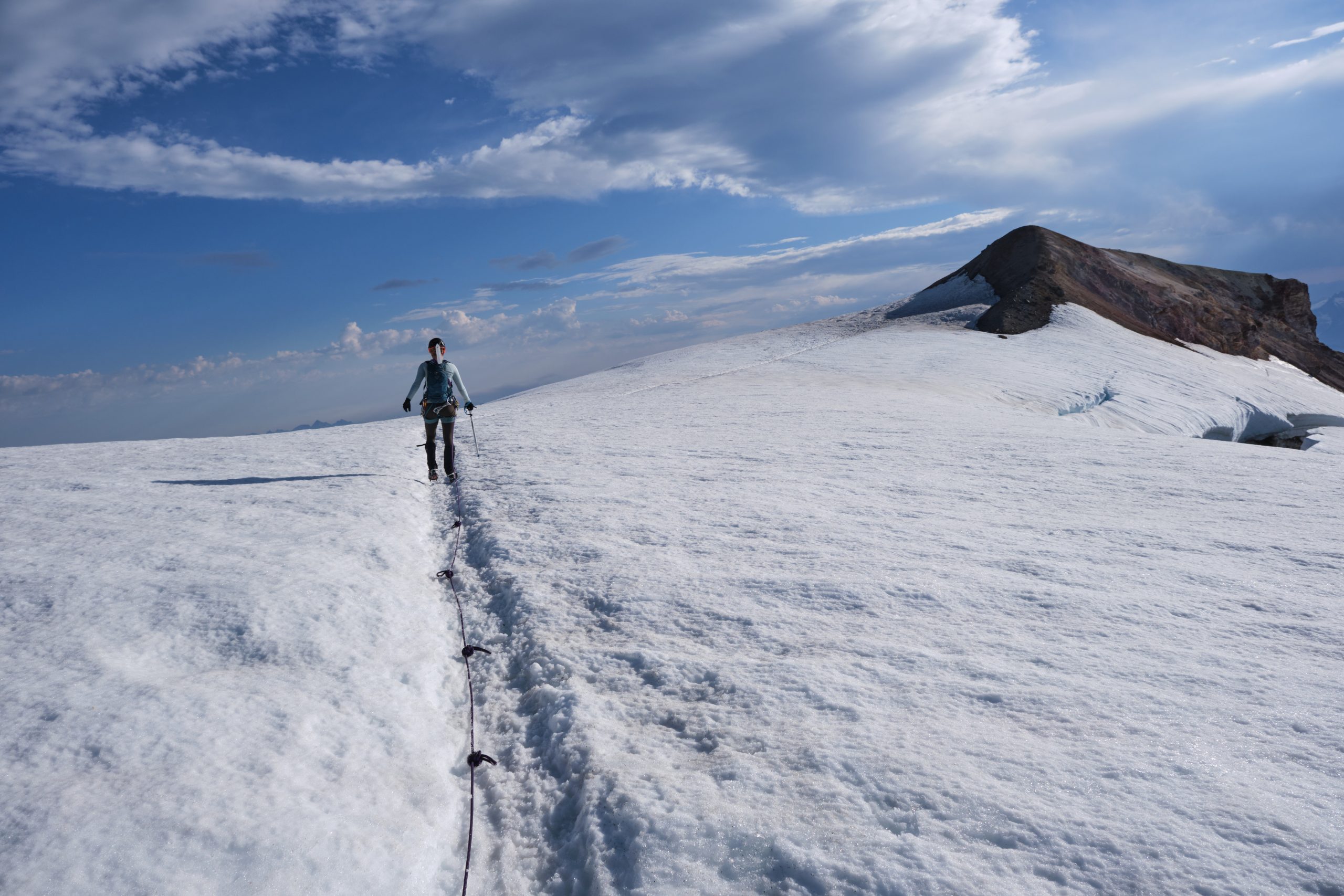
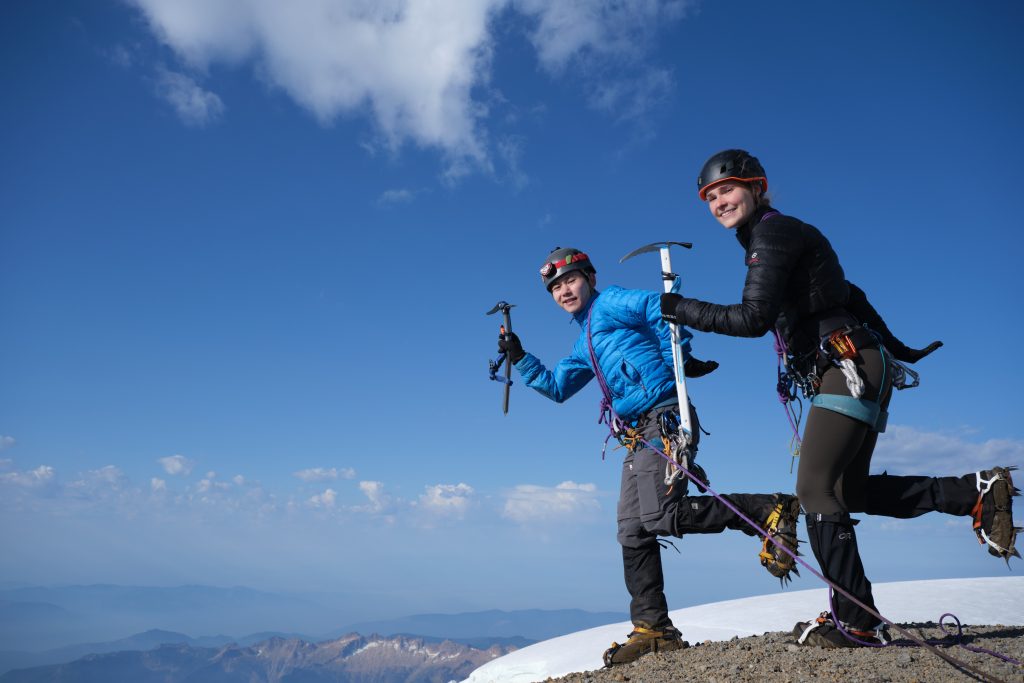
Standing on the summit we quickly threw on our puffy jackets and stood shivering, but excited, as we soaked in the view. International Mountaineers! A biting cold wind swirled around us making its way through every layer of clothing we had on. Despite this, we took our time snapping photos and enjoying a snack. It had only taken us three hours to reach the summit, so it was still mid-morning. We had plenty of time.
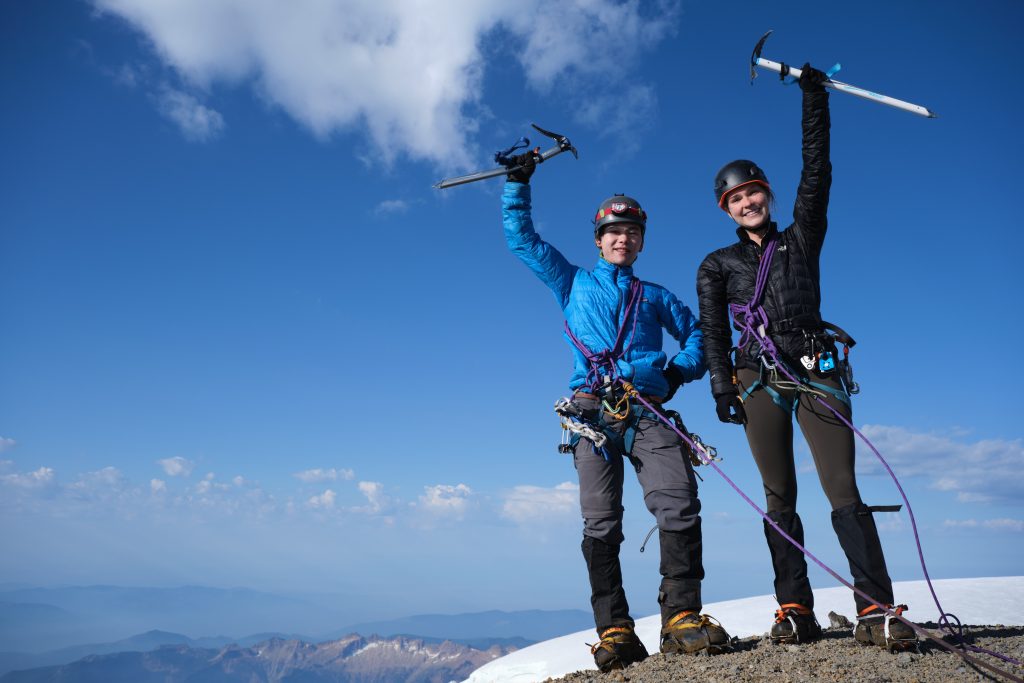
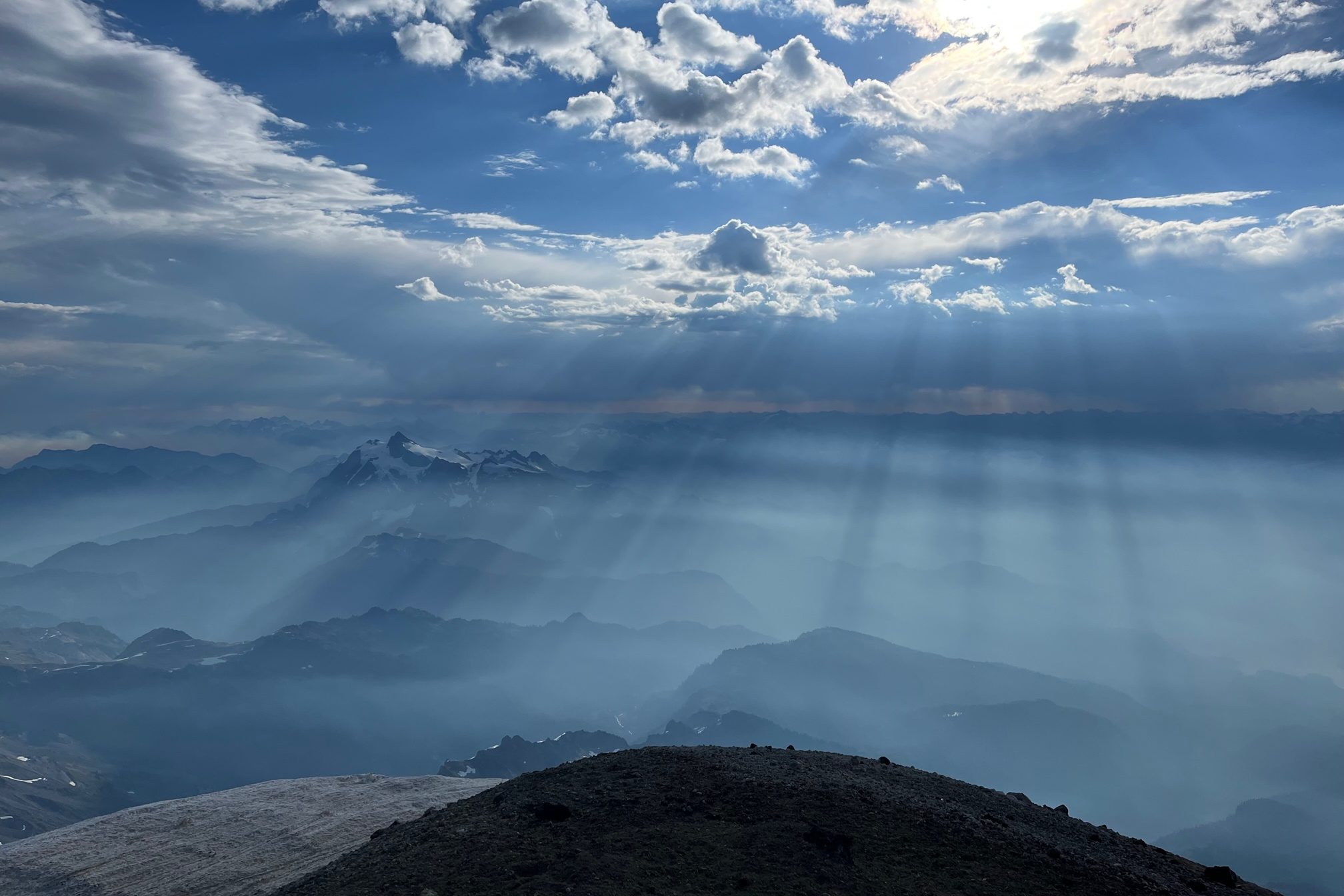
Soon though, with frozen hands we were forced to descend. Out of the wind it was very pleasant. The sun was growing hotter by the minute leaving the snow quite soft. With a brief moment of doubt brought on by a stray path of footprints, we were down well before noon.
Basking in the hot sun while lazily packing our gear, we began heading down at 1:30. This was the boring part. While the glacier had been fun, the rest was just standard pacific northwest hiking. Something we had done a million times before. The hours on trail just didn’t hold the same level of appeal. Sure, the scenery was nice, but it is scenery that we are used to. In fact, while we had only done two day hikes that entire summer (which so happened to be the only training we did for Baker), they really didn’t spark the same excitement they would have a year ago. Discussing this problem, we sped down the trail trying to get to the car as fast as possible. And, from this realization, so began our journey towards increasingly dangerous and exciting trips, straying further from leisurely hiking into the arms of treacherous and thrilling terrain. Or so I predict.
Ultimately, it was significantly more straightforward than expected. We spent under eight hours hiking the entire trip and could have just condensed that down to a single long day. Despite this, the leisurely pace of the trip was nice. I just wish I had brought a book.